Does Medicare Cover Dementia Testing? Cognitive Screening, Brain Scans & Memory Exams Explained
Medicare may cover cognitive testing for dementia when it is medically necessary. Cognitive screening is also included as part of the Medicare Annual Wellness Visit. Additional tests such as MRI scans, neuropsychological testing, and laboratory work may also be covered under Medicare Part B, depending on a physician’s evaluation.
Memory changes are one of the most common concerns people experience as they get older.
If you or a loved one start noticing confusion, memory loss, or changes in thinking, one of the first questions many families ask is:
“Will Medicare cover testing for dementia?”
The short answer is yes — Medicare may cover certain cognitive evaluations and diagnostic tests when they are medically necessary.
Here’s how that works.

Does Medicare Cover Dementia Testing?
Yes. Medicare may cover dementia testing and cognitive evaluations when they are medically necessary.
Under Medicare Part B, doctors can evaluate memory problems, thinking changes, or other cognitive concerns using a combination of screening tools, medical history, and diagnostic testing.
Does Medicare Cover Dementia Testing During the Annual Wellness Visit?
One of the first opportunities for this evaluation happens during the Medicare Annual Wellness Visit (AWV). This yearly preventive visit includes a review for signs of cognitive impairment.
A doctor may ask questions about memory, decision-making, or behavioral changes to help detect possible early signs of dementia or other neurological conditions.
If concerns are identified, the provider may recommend a more detailed cognitive assessment visit. During this appointment, the physician can perform a deeper evaluation of cognitive function and develop a care plan for the patient and their caregivers.
This expanded evaluation may include:
- reviewing medical and family history
- assessing memory, attention, and reasoning
- evaluating medications that may affect cognition
- identifying safety concerns related to daily living
- developing a care plan to support both the patient and caregivers
These services are generally covered under Medicare Part B, although the Part B deductible and coinsurance may apply depending on the situation.
If additional diagnostic testing is needed, Medicare may also cover certain brain imaging studies and laboratory tests used to help determine the cause of cognitive changes.
Because dementia can have many underlying causes, doctors typically use several evaluations together before making a diagnosis. Early evaluation can help patients and families better understand what is happening and begin planning the next steps in care.
| Service | Medicare Coverage |
|---|---|
| Cognitive screening | Included in Annual Wellness Visit |
| Cognitive assessment visit | Covered under Part B |
| MRI / CT scans | Covered when medically necessary |
| Neuropsychological testing | Covered when ordered by a physician |
| Long-term memory care | Not covered |
What Tests Doctors Use to Diagnose Dementia
Diagnosing dementia usually involves several different evaluations rather than a single test. Doctors look at a combination of cognitive screening results, medical history, laboratory testing, and brain imaging to determine the cause of memory changes.
Medicare may cover many of these evaluations when they are medically necessary and ordered by a healthcare provider.
Below are some of the most common tests doctors use when evaluating possible dementia.
Cognitive Screening Tests
Doctors often begin with brief cognitive screening tools designed to evaluate memory, attention, and problem-solving ability.
Common examples include:
Mini-Mental State Examination (MMSE)
This test evaluates memory, orientation, attention, and language skills. It is one of the most widely used cognitive screening tools.
Montreal Cognitive Assessment (MoCA)
The MoCA test evaluates several areas of cognitive function, including memory, attention, language, and visual-spatial abilities. It is often used to detect early cognitive changes.
These tests are typically short and may be used during routine visits or when cognitive concerns are raised.
Neuropsychological Testing
If more detailed evaluation is needed, a doctor may recommend neuropsychological testing.
This type of testing involves a series of standardized assessments administered by a trained specialist, often a neuropsychologist.
These tests evaluate multiple areas of brain function, including:
- memory
- reasoning and problem-solving
- attention and concentration
- language abilities
- visual and spatial skills
Neuropsychological testing can help doctors better understand the pattern of cognitive changes and distinguish between different neurological conditions.
Brain Imaging Tests
Doctors may also order imaging tests to evaluate the structure of the brain and identify possible causes of cognitive decline.
Common imaging tests include:
MRI (Magnetic Resonance Imaging)
MRI scans produce detailed images of the brain and can help identify stroke damage, tumors, or other structural changes.
CT Scans (Computed Tomography)
CT scans can reveal abnormalities such as bleeding, brain shrinkage, or other changes associated with neurological disease.
PET Scans (Positron Emission Tomography)
In some cases, specialized PET scans may be used to detect patterns of brain activity associated with Alzheimer’s disease or other types of dementia.
Medicare may cover these imaging tests when they are medically necessary and ordered by a physician to evaluate symptoms.
Blood Tests and Laboratory Testing
Blood tests are often used to rule out other medical conditions that can cause memory problems or confusion.
Examples include testing for:
- vitamin B12 deficiency
- thyroid disorders
- metabolic conditions
- infections
In some situations, treating an underlying condition can improve cognitive symptoms.
Why Multiple Tests Are Often Needed
No single test can definitively diagnose dementia.
Instead, doctors typically combine information from cognitive screening, medical history, neurological examination, laboratory testing, and imaging studies to develop an accurate diagnosis.
This comprehensive approach helps identify the underlying cause of cognitive symptoms and allows patients and families to begin planning appropriate treatment and support.
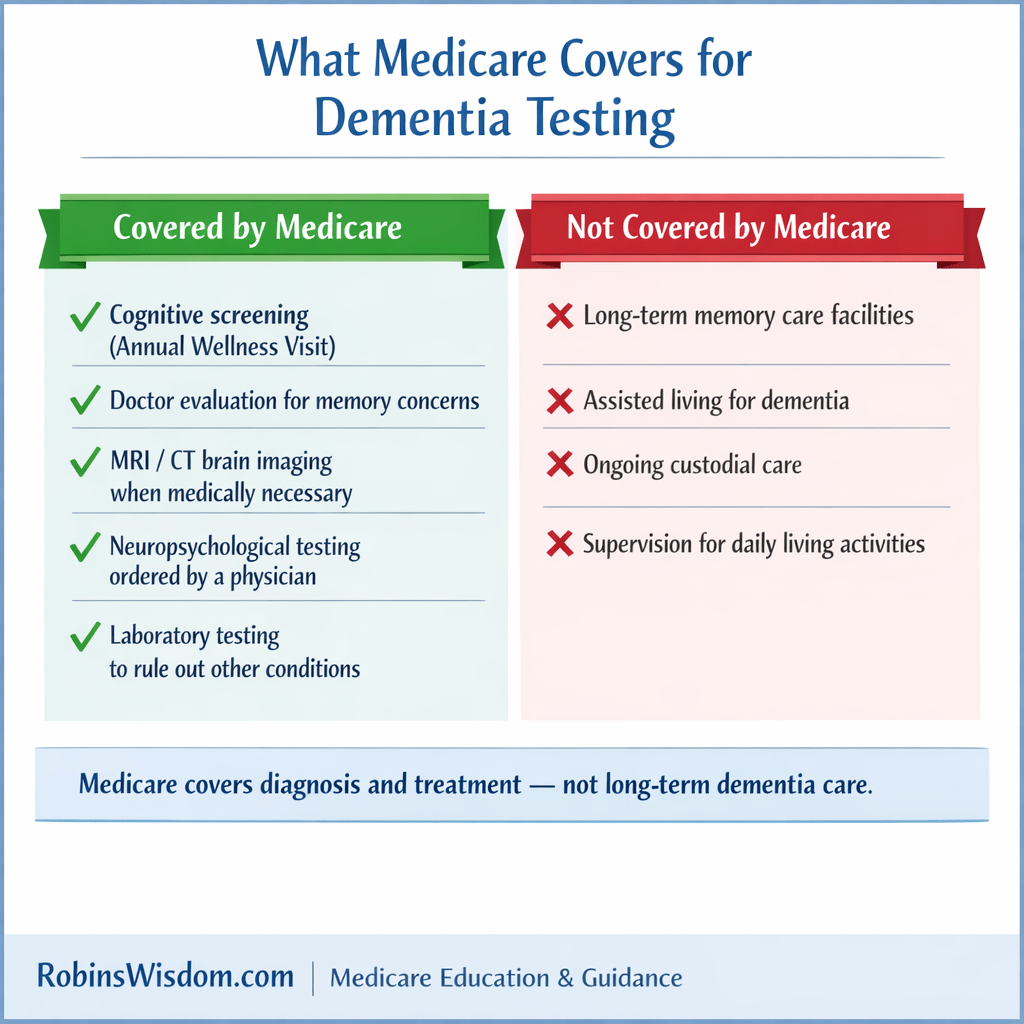
What Medicare Does NOT Cover for Dementia Care
While Medicare may cover medical evaluation, diagnostic testing, and certain treatments for dementia, it generally does not cover long-term custodial care.
This is one of the most common points of confusion for families caring for someone with Alzheimer’s disease or other forms of dementia.
Custodial care refers to non-medical assistance with daily living activities, such as:
- bathing
- dressing
- eating
- using the bathroom
- supervision for safety
- help with medications or daily routines
These types of services are often needed as dementia progresses, but Original Medicare typically does not pay for this type of ongoing care.
Does Medicare Cover Memory Care Facilities?
No. Medicare generally does not cover memory care facilities or assisted living communities.
Memory care units provide long-term supervision and support for individuals living with dementia. Because these services are considered custodial rather than medical care, they are usually paid for privately.
Families often use a combination of:
- personal savings
- long-term care insurance
- Medicaid (for those who qualify)
- veterans benefits (in some cases)
to help pay for these services.
Does Medicare Cover Nursing Home Care for Dementia?
Medicare may cover short-term skilled nursing facility (SNF) care in certain situations, but this coverage is limited.
For Medicare to cover a stay in a skilled nursing facility:
- the patient must first have a qualifying hospital stay of at least three days
- the patient must require skilled medical care, such as rehabilitation or nursing services
Even then, Medicare coverage is temporary and limited, typically covering up to 100 days per benefit period with cost-sharing requirements.
Long-term nursing home care for dementia is generally not covered by Medicare.
Why This Confuses Many Families
Many people assume that because dementia is a medical condition, Medicare will cover long-term care associated with it.
In reality, Medicare is primarily designed to cover medical treatment, not ongoing assistance with daily living.
Understanding this difference early can help families plan for potential long-term care needs and explore other financial options if dementia care becomes necessary.

Why Early Dementia Diagnosis Matters
Receiving an early diagnosis of dementia can be difficult news, but it can also provide important opportunities for patients and families to plan ahead and access the right support.
Identifying cognitive changes early allows doctors to better understand what is causing the symptoms and recommend appropriate treatment or management strategies.
Early evaluation can help patients and families:
- begin medical treatment sooner when appropriate
- review medications that may affect memory or cognition
- improve safety at home and reduce the risk of accidents
- plan for future healthcare and living arrangements
- connect with support services and caregiver resources
In some cases, memory problems may be caused by treatable conditions, such as vitamin deficiencies, thyroid disorders, medication interactions, or sleep issues. Identifying these conditions early can sometimes improve or stabilize cognitive symptoms.
For individuals diagnosed with Alzheimer’s disease or another form of dementia, early diagnosis also allows families to make informed decisions about financial planning, legal documents, and long-term care options while the person is still able to participate in those discussions.
Having clear information about a diagnosis can help reduce uncertainty and allow families to focus on building a care plan that supports the patient’s health, safety, and quality of life.
Frequently Asked Questions About Medicare and Dementia Testing
Many families have questions about how Medicare handles cognitive testing and dementia-related care. Below are answers to some of the most common questions people ask when researching Medicare coverage.
Does Medicare cover dementia testing?
Yes. Medicare may cover cognitive testing for dementia when it is medically necessary. Cognitive screening is also included as part of the Medicare Annual Wellness Visit. If concerns are identified, additional evaluations and diagnostic testing may be covered under Medicare Part B.
Does Medicare cover MRI scans for dementia?
Medicare Part B may cover MRI scans when they are medically necessary to evaluate symptoms such as memory loss or cognitive decline. After the Part B deductible is met, beneficiaries typically pay about 20% of the Medicare-approved amount.
Does Medicare pay for neuropsychological testing?
Medicare may cover neuropsychological testing when it is ordered by a physician to evaluate cognitive symptoms. These tests are typically performed by specialists and provide a detailed assessment of memory, attention, and reasoning abilities.
Does Medicare cover Alzheimer’s testing?
Medicare may cover testing used to diagnose Alzheimer’s disease, including cognitive evaluations, brain imaging, and laboratory testing when ordered by a physician and considered medically necessary.
Does Medicare cover memory care facilities?
No. Medicare generally does not cover memory care facilities or assisted living communities. These services provide long-term custodial care, which is typically paid for privately, through long-term care insurance, or through Medicaid if a person qualifies.
Does Medicare cover long-term dementia care?
Medicare typically does not cover long-term custodial care for dementia. While Medicare may cover medical treatment, hospital care, and short-term skilled nursing services, ongoing assistance with daily living activities is usually not covered.

Planning Ahead With Medicare
Understanding what Medicare covers for dementia testing is only one part of preparing for healthcare decisions later in life.
If you want a broader overview of how Medicare works — including enrollment timing, coverage choices, and important updates for the coming year — you may find this helpful: Medicare GUIDE Model Explained (2026): Dementia Support and Caregiver Respite.
It walks through key Medicare topics step-by-step so you can approach coverage decisions with greater clarity and confidence.
From Robin at RobinsWisdom
Understanding Medicare coverage can feel overwhelming, especially when families are dealing with memory concerns or cognitive changes.
My goal at RobinsWisdom is to help simplify Medicare topics so you can clearly understand what Medicare covers, what it doesn’t, and how to prepare for important healthcare decisions.
If you’re approaching Medicare eligibility or helping a loved one navigate coverage, having accurate information can make a meaningful difference in planning for the future.
If you’re preparing for Medicare enrollment, you may also find my Medicare Enrollment Checklist helpful when planning your next steps.