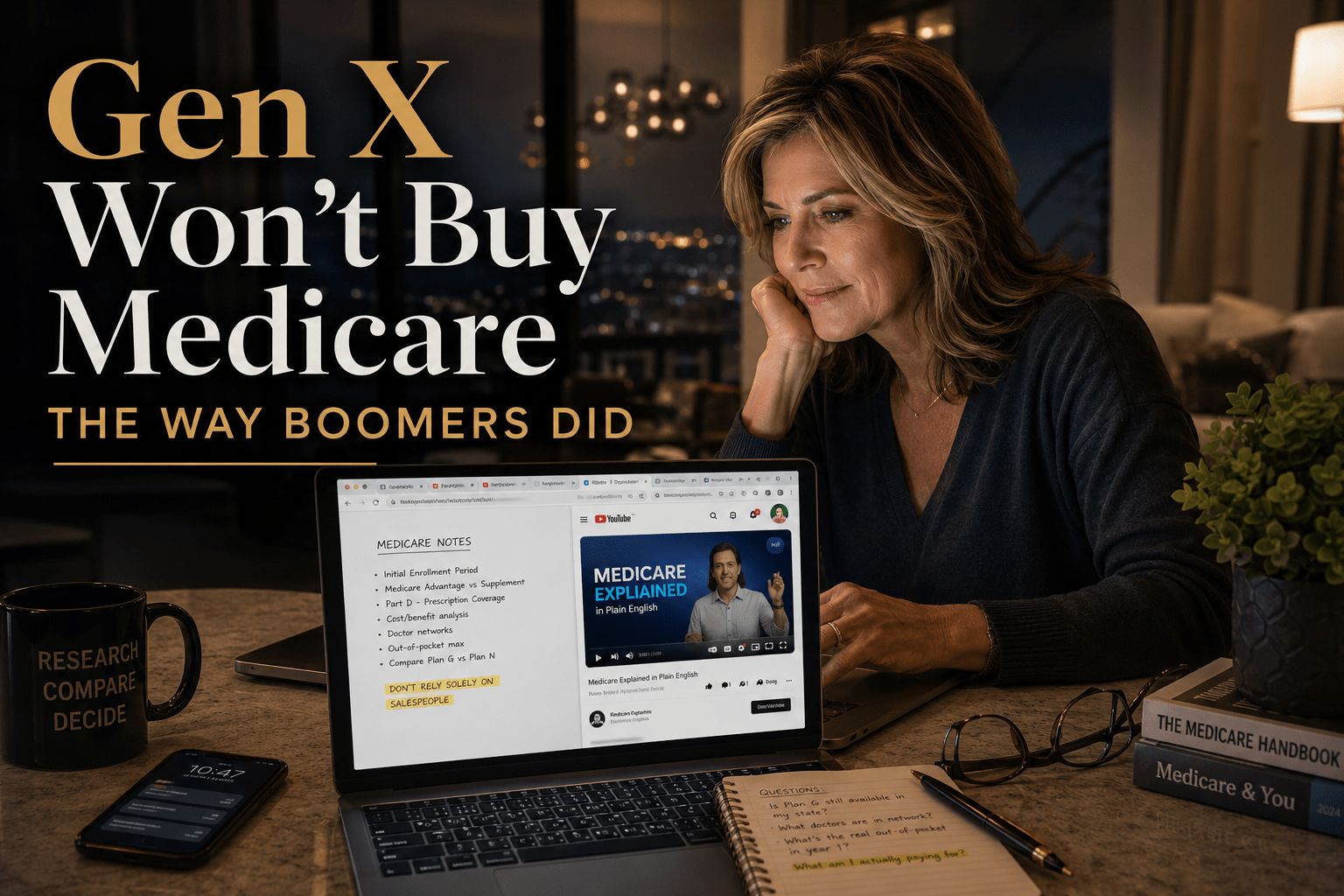
Gen X Won’t Buy Medicare the Way Boomers Did — And the Industry Isn’t Ready
The next generation entering Medicare is going to change the industry completely. And if you’re already thinking about Gen X and Medicare, you’re ahead of most people in this space — because the industry hasn’t caught up yet.
And honestly? I don’t think most Medicare companies are ready for it.
For years, Medicare marketing has looked pretty much the same: television commercials, postcards in the mailbox, endless phone calls, confusing brochures, and generic sales pitches. That approach worked for a long time.
But Generation X is different.
Gen X researches everything. They watch YouTube before making decisions. They compare reviews. They Google side effects, pricing, complaints, loopholes, and alternatives before ever filling out a form.
And perhaps most importantly — they do not automatically trust institutions, marketing, or sales systems just because someone sounds authoritative.
That changes everything about how Medicare education needs to work moving forward.
Who Is Gen X?
Generation X generally refers to people born between 1965 and 1980. The oldest members of Gen X will begin aging into Medicare in 2030, with the full wave following through 2045, following the Baby Boomer generation. — but culturally, they couldn’t be more different.
As someone born in 1970 myself, I’ve been thinking a lot about how differently people my age approach major decisions compared to previous generations. We grew up in a fascinating transition period. We remember paper maps, encyclopedias, and calling businesses on landlines — but we also adapted to search engines, smartphones, online reviews, YouTube, and now AI tools.
Because of that, many Gen X consumers research deeply before trusting anything — especially when it comes to healthcare, finances, and retirement.
This is a generation that:
- Watched the internet arrive in real time
- Adapted from paper systems to digital systems
- Became highly self-directed researchers
- Learned to question advertising claims
- Values independence and flexibility over being told what to do
The financial pressure is real. According to a 2025 Nationwide survey, a third of financial advisors cite escalating healthcare and insurance costs as a top obstacle for Gen X clients — and 89% of Gen Xers themselves say rising costs are making it harder to retire comfortably. Nearly half (48%) believe Social Security and Medicare will be cut. Research from Schroders puts the savings gap at nearly $405,000 — the largest of any generation.
This is not a generation that responds well to vague answers or high-pressure sales tactics. They want to research first and decide second.
The Medicare Industry Still Markets Like It’s 1997
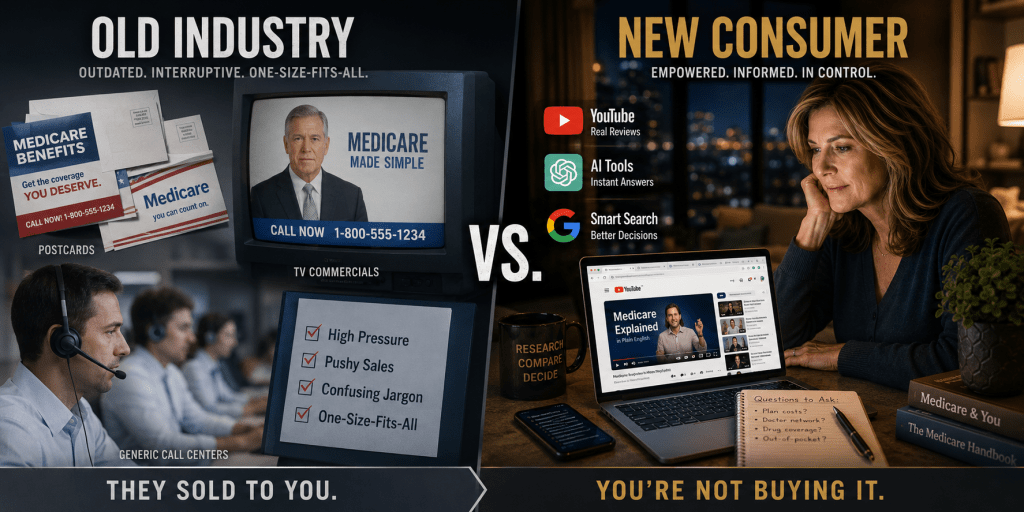
A lot of Medicare marketing still feels stuck in another era: lead-generation forms, aggressive phone calls, fear-based advertising, complicated fine print, and oversized promises in commercials.
Consumers are noticing.
Research from Ipsos confirms that Baby Boomers and Gen X are actually less likely to trust financial services, banking, and consumer brands than younger generations — a finding that often surprises people who assume older generations are more trusting. The skepticism is real, and it’s rooted in decades of watching institutions overpromise and underdeliver.
There’s also a growing level of scam fatigue and trust fatigue that simply didn’t exist decades ago. People are screening calls more than ever, ignoring unknown numbers, researching companies before responding, and being far more cautious about where they enter their personal information online.

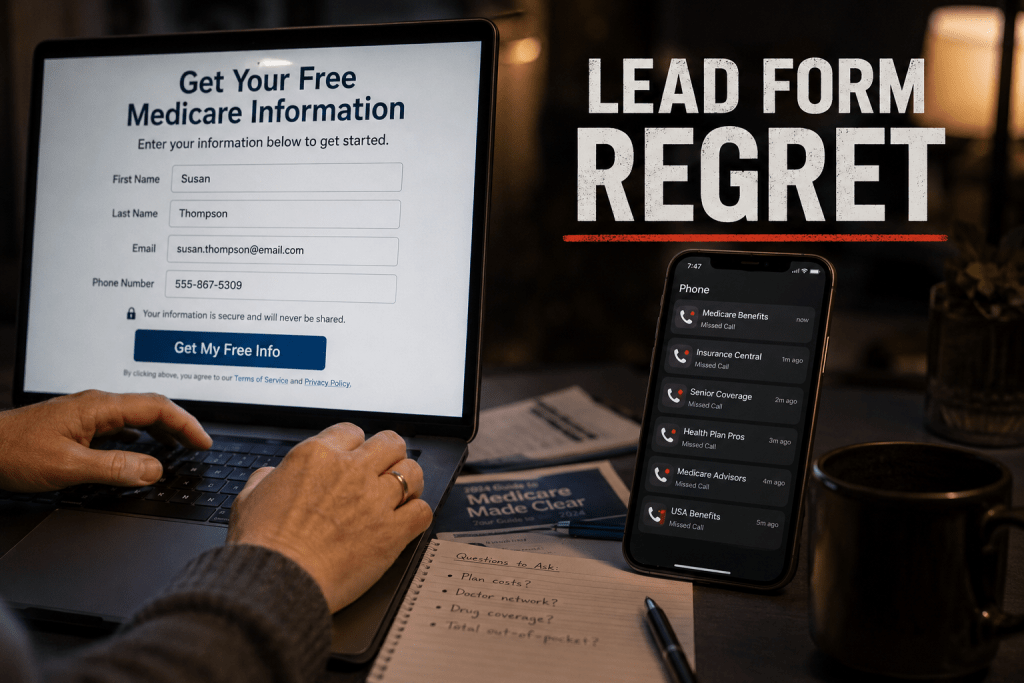
Many Gen X consumers are not going to answer a phone that suddenly starts ringing off the hook after filling out a form somewhere online. In many cases, they’ll block the number and move on. Most would rather research first, reach out when they feel ready, and choose who they want to speak with — on their own terms.
This matters because many people searching online for Medicare information accidentally enter their contact details into a lead-generation website and suddenly start receiving calls from multiple agents or call centers within hours. That experience creates distrust almost immediately.
Gen X consumers are especially sensitive to this because they grew up watching industries become increasingly automated, outsourced, and impersonal. They value transparency and authenticity far more than polished sales language.
And if something feels manipulative? They’re gone.
Gen X Researches Medicare Differently
This may be the biggest shift of all.
Many people approaching Medicare today no longer start by calling an agent. They start by researching online — through YouTube, Reddit, Google, AI tools, online reviews, Facebook groups, and Medicare forums.
And YouTube in particular matters.
While younger generations are often the focus of video marketing, Gen X accounts for an estimated 1.5 billion daily views on YouTube. This generation also spends nearly 32 hours per week consuming media overall, and when they turn to YouTube, they are not just looking for entertainment. Research shows that many use the platform specifically to learn how to do something, making it an increasingly important research tool before major financial, healthcare, and purchasing decisions.
Before they ever speak to someone, they often already know:
- Basic Medicare terminology
- Enrollment timelines and common penalties
- The difference between Medicare Advantage and Medigap
- Premium ranges and plan types
- What questions to ask
The role of the Medicare advisor is changing. People are no longer simply looking for “someone to enroll them.” They’re looking for someone they trust, someone who explains things clearly, someone who respects their intelligence, and someone who helps them cut through the noise.
That’s a completely different relationship.
Gen X May Redefine Retirement Itself
Many Gen X consumers may also redefine what retirement looks like altogether.
For some, retirement may not mean completely stopping work. According to PwC’s 2026 Employee Financial Wellness Survey, only 38% of Gen X employees are confident they’ll retire when they originally planned — not because they don’t want to, but because the financial math doesn’t add up.
Many are also choosing to shift toward more flexible, meaningful, self-directed work that feels more aligned with how they actually want to live — consulting, creating, building businesses, traveling, or staying mentally engaged in ways that feel purposeful.
That mindset is also shaping how this generation approaches Medicare decisions. For someone who plans to keep working past 65, Medicare timing and employer coverage coordination becomes a much more complex conversation. They need real answers — not a script.
AI Is About to Change Medicare Research Too
More consumers are beginning to use AI tools to organize information, compare options, summarize complex topics, generate questions before appointments, and understand confusing terminology.
That doesn’t mean human advisors disappear. In fact, it may make trusted human guidance even more valuable.
Why? Because information is becoming abundant. Trust is becoming rare.
The future likely belongs to advisors who combine real experience, transparent education, modern technology, and personalized guidance — instead of relying purely on scripts or pressure tactics.
Gen X Wants Education Before Enrollment
This is where I think many Medicare companies still misunderstand the modern consumer.
Today’s Medicare shopper often wants education first, clarity first, research first, trust first. Not pressure first.
People want time to actually understand Medicare Part A, Part B, Medicare Advantage, Medigap, Part D drug coverage, IRMAA surcharges, enrollment timelines, late penalties, and provider networks. And they want those explanations in plain English — not conversations that feel scripted or transactional.
A published study in PMC on generational differences in healthcare noted that Gen X tends to be “skeptical of large institutions, including healthcare, because of formative experiences” — including watching the AIDS crisis, corporate downsizing, and financial recessions reshape the world around them. That skepticism isn’t cynicism. It’s earned.
The Future of Medicare Education Will Look Different
I believe the next era of Medicare education will be more digital, more transparent, more searchable, more personality-driven, and more educational. Less corporate. Less dependent on call centers.
Consumers increasingly want one trusted source — educational videos, straightforward explanations, authentic communication — not endless transfers between departments, robotic scripts, or the feeling that their information was sold to half the internet after filling out one form.
Medicare Is Personal — And Gen X Knows It
Healthcare decisions are deeply personal. Retirement decisions are personal. Financial decisions are personal.
Gen X consumers often respond best to advisors who speak honestly, explain tradeoffs clearly, admit complexity when it exists, educate instead of pressure, and respect the client’s ability to think critically.
That’s a major shift from older marketing models built around urgency and sales funnels.
Final Thoughts
The Medicare world is changing. The next generation entering it expects transparency, education, technology, flexibility, and authenticity.
The advisors who adapt to that shift will be the ones who earn long-term trust — because Gen X is not going to buy Medicare the way previous generations did. They’re going to research it differently, question it differently, and compare it differently.
And they’ll expect the industry to evolve along with them.
Frequently Asked Questions
When does Gen X start becoming eligible for Medicare? The oldest Gen Xers — those born in 1965 — will turn 65 in 2030. From there, the entire Gen X cohort will age into Medicare through 2045, representing tens of millions of new enrollees over the next two decades.
Why is Gen X different from Baby Boomers when researching Medicare? Gen X tends to rely heavily on online research, YouTube, reviews, forums, and digital tools before making decisions. Research also shows they are more skeptical of large institutions — including healthcare organizations — than previous generations. Many prefer educational guidance over traditional sales approaches.
Will AI replace Medicare advisors? AI may help consumers research and organize information, but trusted human guidance still matters — especially when making important healthcare and financial decisions. Information is becoming abundant. Trust is becoming rare.
Why do people get so many Medicare phone calls after filling out forms online? Some Medicare lead-generation websites share or sell consumer information to multiple agents or call centers. This is one reason many consumers are becoming more cautious about where they request information online — a concern that resonates especially strongly with Gen X.
Is Gen X financially prepared for Medicare costs? Many are not. Research shows the average Gen X household expects a retirement savings shortfall of nearly $405,000. Healthcare costs are consistently cited as their top retirement concern — which makes getting Medicare right even more important.
If you’re approaching Medicare and looking for straightforward education without the sales pressure, explore more resources and videos at RobinsWisdom — or book a free Medicare review when you’re ready.
Read More
- Medicare Advantage vs. Medigap
- What IRMAA Means for Higher-Income Retirees
- Medicare Enrollment Mistakes to Avoid
- Can You Delay Medicare If You’re Still Working?
- What Medicare Does NOT Cover
This content is for educational purposes only and should not be considered legal, tax, or financial advice. Medicare plan availability and rules can vary by state and situation. Robin Dall is an independent Medicare broker licensed in Florida, Texas, and Arizona. Not connected with or endorsed by the U.S. government or the federal Medicare program.