Are Medicare Commercials Legitimate? What the Ads Don’t Tell You
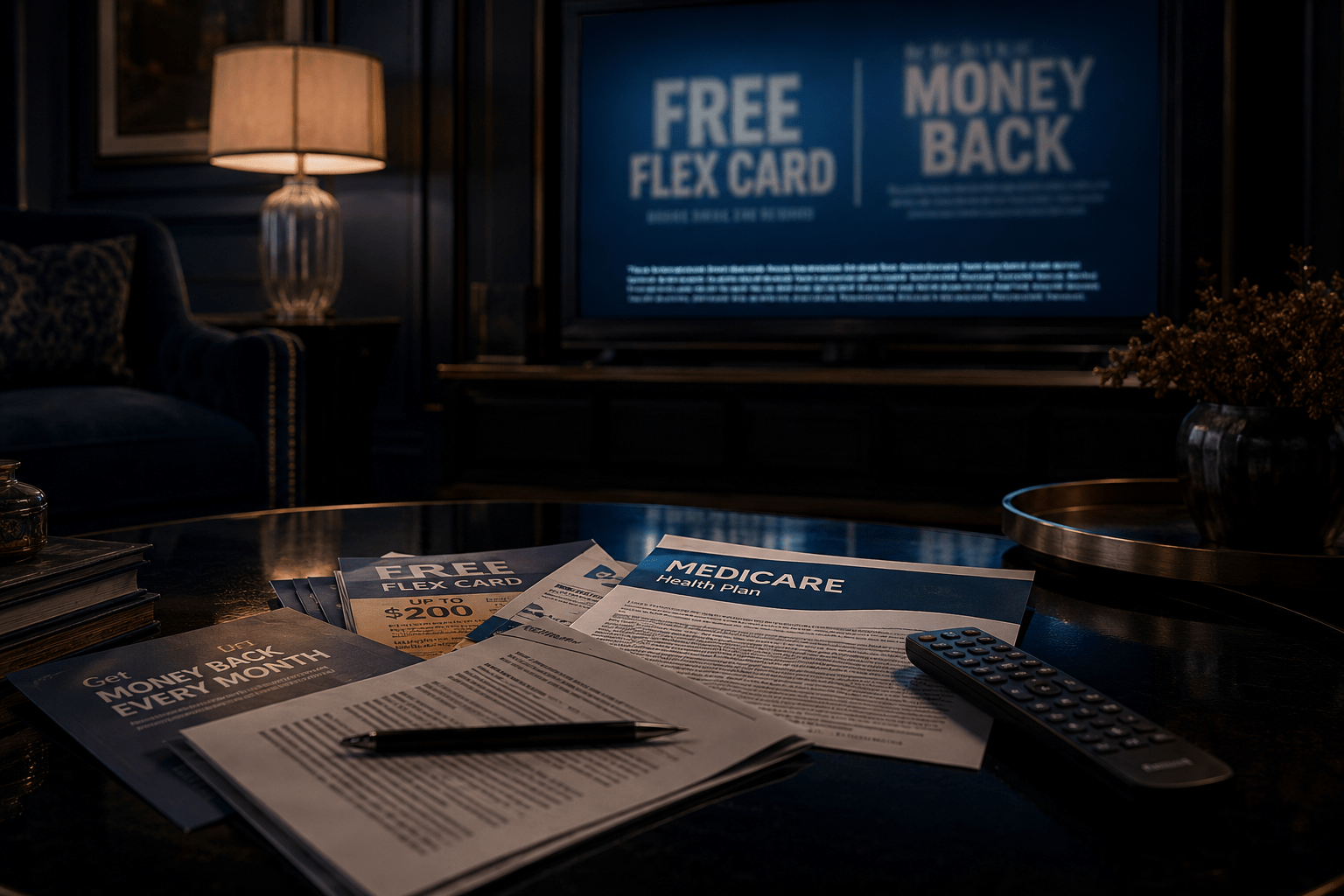
Free flex cards. Money back on your Social Security check. $0 premium plans. Here’s what’s real — and what you need to read before you call that 1-800 number.
Every fall, Medicare commercials suddenly take over television. Free flex cards. Money back on your Social Security check. $0 premium Medicare plans. Free groceries. Extra dental benefits.
If you’ve ever watched one of these ads and thought, “Is this actually real?” — you’re not alone. Searches for phrases like ‘Are Medicare commercials legitimate?’ and ‘Why are Medicare commercials everywhere?’ spike every fall during Medicare enrollment season. Many people contact me confused, and sometimes frustrated, after seeing promises on TV that sound almost too good to be true.
Some Medicare commercials advertise real benefits. But the details behind those benefits matter far more than the commercial itself. Keep reading before you dial.
- Medicare commercials spike every fall during the Annual Enrollment Period (Oct 15 – Dec 7).
- Some advertised benefits are real — but eligibility, availability, and costs vary widely by plan and ZIP code.
- Original Medicare does not issue flex cards. Some Medicare Advantage plans offer similar benefits.
- A $0 premium plan does not mean free healthcare — Part B premiums, copays, and deductibles still apply.
- Filling out an online form can trigger calls from multiple companies, not just one.
- Always review provider networks, drug coverage, and total costs before enrolling.
Why Are Medicare Commercials Everywhere in the Fall?
The annual flood of Medicare ads is tied directly to Medicare’s Annual Enrollment Period (AEP), which runs October 15 through December 7 every year. During this window, people with Medicare can:
- Switch Medicare Advantage plans
- Change their Medicare Part D prescription drug plan
- Enroll in new coverage for the upcoming year
Coverage changes made during AEP generally become effective January 1. Because millions of beneficiaries are actively reviewing their options, insurance companies pour money into advertising during these weeks — on TV, Facebook, YouTube, Google, and everywhere else you look.
Many of these ads are created by insurance companies directly. Others come from marketing organizations or lead-generation companies that connect consumers with agents or call centers. That difference matters — and we’ll come back to it.
Are Medicare TV Ads Legitimate?
Some are. But “legitimate” doesn’t mean “applies to you.”
This is the biggest misunderstanding I see. A commercial can be 100% legal and still describe a benefit that doesn’t exist in your county, doesn’t cover your doctors, or only applies to people who qualify for both Medicare and Medicaid.
Benefits can vary based on:
- Your ZIP code and county
- The specific Medicare Advantage plan
- Provider networks
- Prescription drug coverage
- Financial eligibility requirements
Commercials are designed to grab attention — not explain eligibility rules, coverage gaps, or provider restrictions. The details that matter most to you are almost never in the ad.
The Truth About Medicare Flex Card Commercials
Flex cards are one of the most heavily advertised Medicare benefits today. Commercials imply that beneficiaries can receive prepaid cards loaded with money for groceries, utilities, dental expenses, over-the-counter products, or healthcare costs.
Myth: Original Medicare provides a flex card to everyone.
Reality: Original Medicare does not issue flex cards. Some Medicare Advantage plans offer supplemental benefits that function similarly — but benefit amounts, availability, and spending restrictions vary widely. In many cases, the richest advertised benefits are tied to plans designed for people who qualify for both Medicare and Medicaid (dual eligibility).
That doesn’t mean these commercials are fake. It means you need to verify what the benefit actually covers, whether your doctors are in network, whether your prescriptions are covered, and whether the plan is even available in your area before enrolling.
What Does a $0 Premium Medicare Plan Really Mean?
Myth: A $0 premium plan means your healthcare is free.
Reality: Most people on Medicare Advantage still pay their Medicare Part B premium — and depending on the plan, may also have copays, deductibles, coinsurance, referral requirements, and network restrictions.
For example, someone on a $0 premium plan might still pay a copay to see a specialist, a separate charge for lab work, and additional costs for imaging — all from a single visit. The monthly premium is just one part of the picture.
Understanding the full cost structure of a Medicare plan matters far more than focusing on the advertised monthly premium.
Why Do Medicare Agents Keep Calling Me?
This is one of the most common frustrations I hear — and honestly, it’s something I saw firsthand earlier in my career working with larger insurance firms.
People fill out what they believe is a simple online form requesting Medicare information… and suddenly start receiving nonstop calls, texts, and emails from multiple companies.
Many were understandably upset — they thought they were only contacting one company. But in many cases, their information had entered a lead-generation system that distributed their contact details to multiple licensed agents or call centers.
Always verify who you’re actually contacting — an insurance company, a licensed broker, or a third-party marketing organization. The URL and the fine print tell you more than the headline does.
How to Protect Yourself Before Responding to a Medicare Commercial
- Provider networks — are your current doctors included?
- Prescription drug coverage — are your medications covered at a reasonable cost?
- Total out-of-pocket costs, not just the monthly premium
- Deductibles, copays, and coinsurance amounts
- Referral rules — do you need a referral to see a specialist?
- Plan limitations for services you use regularly
Never assume the commercial tells the whole story. And don’t feel pressured to enroll quickly because an ad creates urgency — Enrollment deadlines are real, but commercials may also use urgency-based marketing language designed to encourage faster responses.
Some Medicare Advantage plans can be excellent options for the right person. The goal is making sure the plan actually fits your healthcare needs, prescriptions, providers, travel habits, and budget.
Watch: The Truth About Medicare Commercials
I put together a video walking through everything we’ve covered here — the flex card claims, what $0 premium actually means, how online lead funnels work, and what to ask before you sign up for anything.
The Truth About Medicare Commercials · Robin Dall, Independent Medicare Broker · May 2026
Frequently Asked Questions
Are Medicare commercials legitimate?
Some Medicare commercials advertise real benefits available through certain Medicare Advantage plans. However, benefits, eligibility, provider networks, and availability vary significantly by plan and location. A commercial can be legal and accurate while still describing a benefit that doesn’t apply to your situation.
Why are Medicare commercials everywhere during the fall?
Medicare commercials spike during the Annual Enrollment Period (AEP), which runs October 15 through December 7 each year. This is when millions of Medicare beneficiaries can switch or enroll in coverage — so insurance companies and marketing organizations advertise heavily across TV, social media, and online platforms.
Are Medicare flex card commercials real?
Some Medicare Advantage plans do offer supplemental benefits that function similarly to flex cards. However, Original Medicare itself does not issue flex cards. Benefit amounts, eligibility requirements, and availability vary significantly — and some of the most heavily advertised supplemental benefits may be associated with plans designed for people who qualify for both Medicare and Medicaid.
Does a $0 premium Medicare plan mean free healthcare?
No. Most people on a $0 premium Medicare Advantage plan still pay their Medicare Part B premium. Depending on the plan, members may also have copays, deductibles, coinsurance, and network restrictions. The advertised premium is only one piece of the total cost picture.
Why do I suddenly receive calls after filling out a Medicare form online?
Some online Medicare forms operate as lead-generation systems that may distribute your contact information to multiple licensed agents or call centers. Before entering personal information online, verify whether you’re contacting an insurance company directly, a licensed broker, or a third-party marketing organization.
Final Thoughts
Are Medicare commercials legitimate? Some advertise real benefits. But most simplify — or heavily market — those benefits without fully explaining eligibility rules, limitations, provider restrictions, or cost-sharing details you need before enrolling.
That’s why asking questions matters. And that’s why working with someone who explains both the advantages and the limitations can make a meaningful difference in the coverage you end up with.
Have questions about your Medicare options?
No call centers. No 1-800 numbers. Just Robin — a licensed independent Medicare broker who will walk you through your real options, in plain English.
Request a Medicare Review →Not connected with or endorsed by the U.S. government or the federal Medicare program. Plan availability and benefits vary by location.