How Much Does Medicare Pay for Nursing Homes? (What It Actually Covers)
Quick Answer: Medicare does not pay for long-term nursing home care. It only covers short-term skilled nursing care after a qualifying hospital stay, and even then, coverage is limited to up to 100 days with strict conditions.
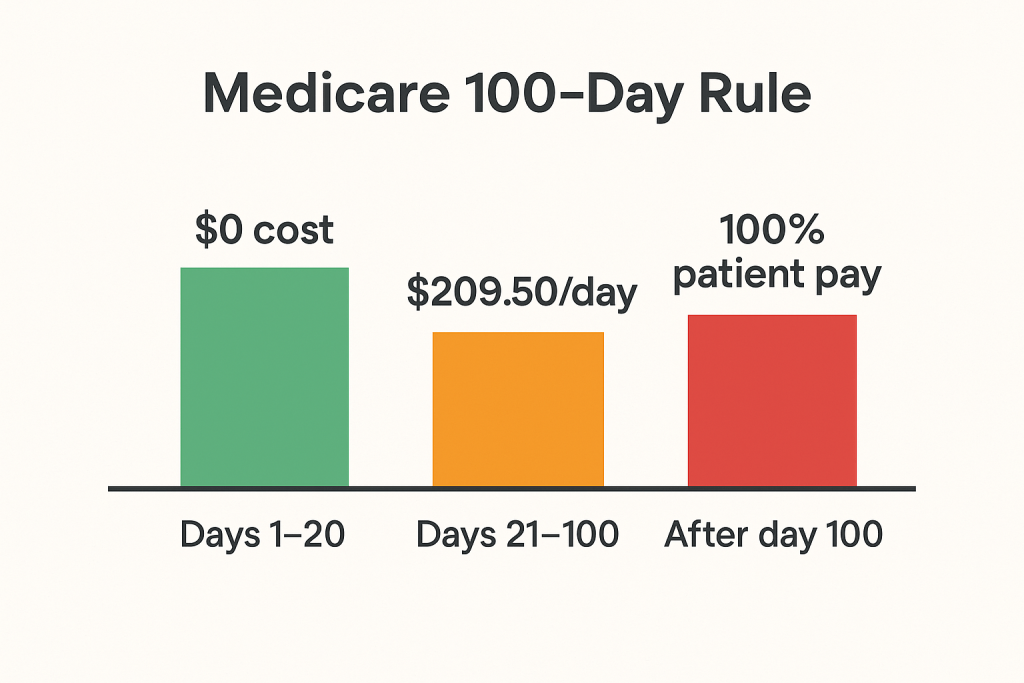
- Days 1–20: $0 (fully covered)
- Days 21–100: daily coinsurance (~$200+/day)
- After Day 100: you pay 100%
How much does Medicare pay for nursing home care?
Let’s start with a number that should stop you in your tracks.
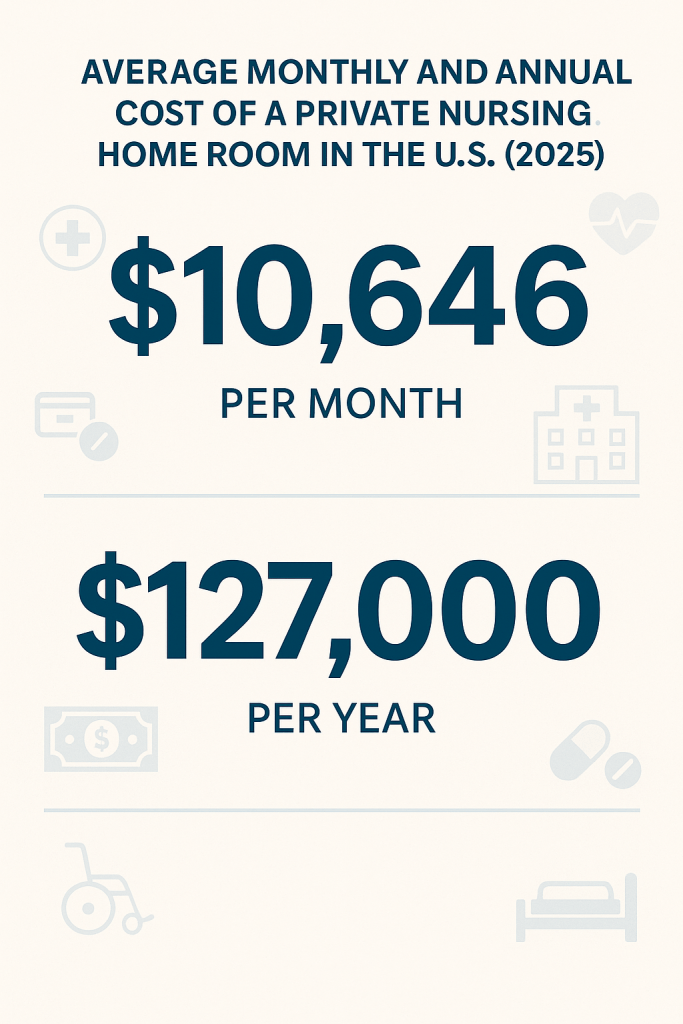
The median cost for a private room in a nursing home is now around $10,646 per month—that’s over $127,000 a year.
And here’s where things get dangerous.
So many people assume Medicare will step in and cover these costs. That it’s the safety net that will protect their savings when long-term care is needed. (If you’re not sure exactly when Medicare starts, my guide on How old you have to be to get Medicare will walk you through the rules.)
It doesn’t.
That belief isn’t just slightly off—it’s a financial mistake that can cost families everything.
In this guide, I’ll show you exactly what Medicare actually pays for, what it doesn’t, and how to avoid one of the most expensive misunderstandings in retirement planning.
Does Medicare Pay for Nursing Home Care?
Medicare does not pay for long-term nursing home care. It only covers short-term skilled nursing care after a qualifying hospital stay, and coverage is limited to up to 100 days. Ongoing custodial care—such as help with bathing, dressing, or eating—is not covered.
Does Medicare Cover Nursing Home Care? (What It Actually Covers)
Let’s get right to the core of this—the single misunderstanding that can cost a family everything. Medicare does not pay for long-term nursing home care. I want you to let that sink in for a moment. The kind of care most people actually need in a nursing home—the day-in, day-out help for months or years—is not a covered benefit.
It all comes down to two very different types of care, and Medicare only covers one of them—and even then, for a limited time.
Skilled Nursing Care – Short-Term, Intensive, and Medical
Think of skilled nursing care like having a paramedic or hospital nurse on hand. It’s intensive, medical, and temporary—meant for someone recovering from a major health event like a stroke, serious fall, or major surgery. This care is provided by licensed professionals such as nurses, physical therapists, and occupational therapists, and it may involve wound care, IV medications, or intensive rehab therapy. The goal is short-term recovery—get better and go home.
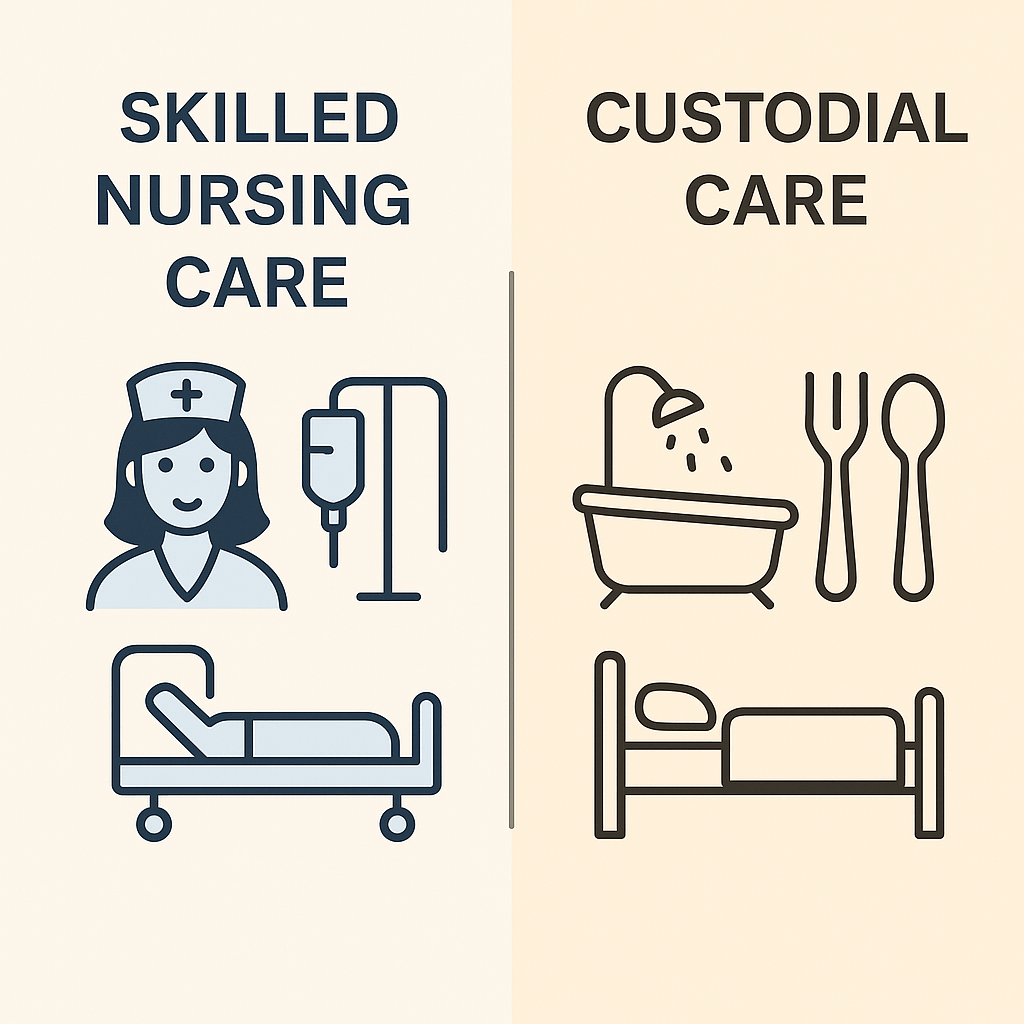
Custodial Care – Long-Term Help with Daily Living
Custodial care is what most of us imagine when we picture a nursing home. It’s non-medical assistance with Activities of Daily Living (ADLs)—help with bathing, dressing, eating, getting in and out of bed, or using the restroom. This care is for people who can’t live safely on their own but don’t need round-the-clock medical supervision. It’s long-term, maintenance-focused, and the reason most people ultimately enter a nursing home.
And here’s the hard truth again: with very few exceptions, Medicare will not pay for long-term custodial care. It classifies this as personal assistance, not medical care—leaving families entirely responsible for the bill.
Does Medicare Pay for 100 Days in a Nursing Home? The Real Rules
You’ve probably heard someone say, “Oh, but Medicare pays for the first 100 days!” This is one of the most dangerous half-truths in all of senior care planning. Yes, there is a Medicare 100-day benefit, but it’s so specific and restrictive that it almost never works the way families think.
For Medicare to even consider paying for care in a Skilled Nursing Facility (SNF), you have to clear three major hurdles.
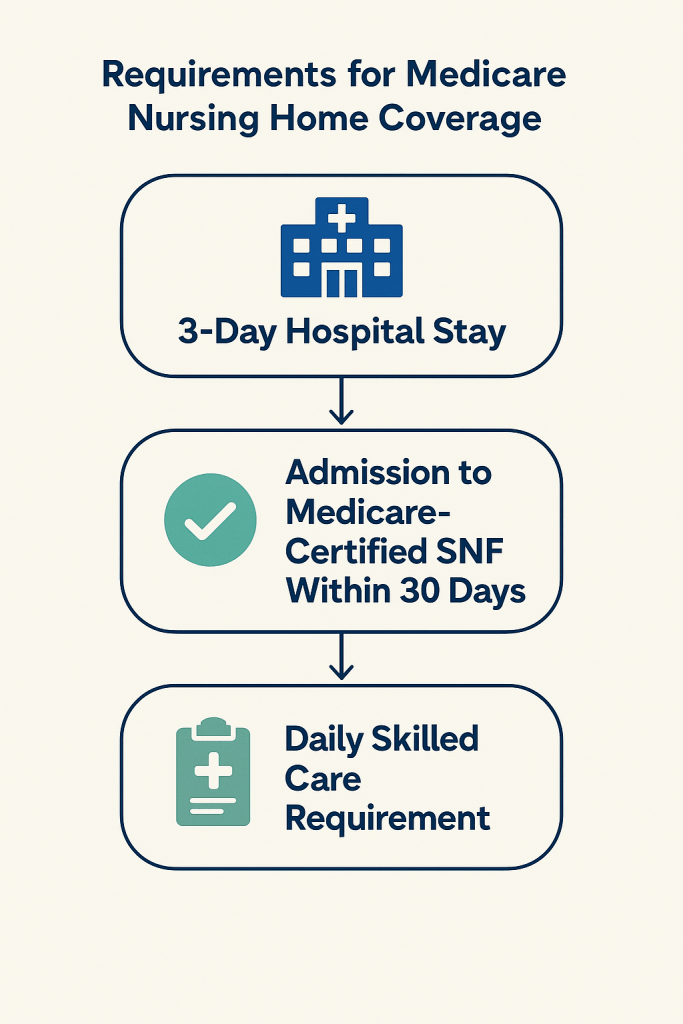
Step 1 – The 3-Day Qualifying Hospital Stay
You must be formally admitted to a hospital as an inpatient for at least three consecutive days. Time spent in the ER or under “observation status”—even if your in a hospital bed for 70 hours—does not count. This small detail trips up countless families and can cost thousands.
Step 2 – Admission to a Medicare-Certified Skilled Nursing Facility
Within 30 days of leaving the hospital, you must be admitted to a Medicare-certified SNF. Any delays or admissions to a non-certified facility will disqualify you from coverage.
Step 3 – Doctor Certification for Daily Skilled Care
Your doctor must certify that you need daily skilled nursing or rehab services—things like physical therapy, wound care, or IV medications—that can only be provided in a skilled facility.
How the Medicare 100-Day Benefit Actually Breaks Down in 2025
- Days 1–20: Medicare covers 100% of the approved amount. You pay $0.
- Days 21–100: You pay $209.50 per day in coinsurance—over $6,200 per month—while Medicare covers the rest.
- After Day 100: Medicare pays nothing. You’re responsible for 100% of the cost.
The Biggest Catch Families Don’t See Coming
That 100-day window can slam shut at any time. The second your condition stabilizes and you no longer requires skilled care, Medicare coverage ends—whether it’s day 15, day 45, or day 85. From that moment, all costs become your responsibility.
Stay Informed to Protect Your Family’s Future
I know this is a lot of heavy, frustrating information. It’s complicated—and honestly, it can feel like the system is designed to confuse you.
If this breakdown of will Medicare pay for nursing home care gave you a lightbulb moment, take one simple step: subscribe to The Journal. It’s where I share clear, no-nonsense guides on Medicare nursing home coverage, long-term care planning, and ways to protect your family’s savings.
And if you know someone who’s caring for a parent—or might face these decisions soon—share this article with them. It helps me reach more families who need these answers, and it makes sure you’re never caught off guard by the fine print.
What Medicare Does NOT Cover in a Nursing Home
This is where the biggest misunderstanding happens.
While Medicare does cover short-term skilled care under very specific conditions, it does not pay for most of what people actually need in a nursing home long-term.
Here’s what Medicare typically does NOT cover:
Long-Term Custodial Care
This is the big one.
Medicare does not pay for ongoing help with daily activities like:
- Bathing
- Dressing
- Eating
- Using the bathroom
- Walking or mobility assistance
If this is the primary type of care needed, you are responsible for 100% of the cost.
Extended Nursing Home Stays
Even if you qualify for skilled nursing care:
- Coverage ends after 100 days
- After that → you pay everything out of pocket
There is no “extended coverage” safety net through Medicare.
Room and Board (Long-Term)
Medicare does not cover:
- Permanent residency in a nursing home
- Long-term room and meals
These are considered non-medical living expenses, even though they’re essential.
Care Without a Qualifying Hospital Stay
To even qualify for short-term coverage, Medicare requires:
- A 3-day inpatient hospital stay
- Admission to a Medicare-approved skilled nursing facility
If those conditions aren’t met, Medicare pays nothing.
Non-Skilled or Maintenance Care
Medicare is designed for medical treatment and recovery, not ongoing support.
It does not cover:
- Supervision for safety
- Assistance for chronic conditions without improvement
- Long-term memory care (like Alzheimer’s or dementia support)
Why This Matters More Than You Think
This is the moment most families realize:
Medicare is not long-term care insurance.
And by the time this becomes clear, many are already facing:
- $8,000–$12,000+ per month in costs
- Rapid depletion of savings
- Stressful, last-minute financial decisions
The Bottom Line
Medicare helps with short-term recovery.
It does not cover long-term living or ongoing care in a nursing home.
Understanding this difference early is what allows you to:
- Protect your assets
- Plan smarter
- Avoid one of the most expensive surprises in retirement
How to Pay for Nursing Home Care Without Losing Everything
If Medicare isn’t the long-term answer, what is? It can feel overwhelming, but you do have options. This is where we stop admiring the problem and start building the solution. Having a plan for nursing home costs is essential to protect your family’s financial future.
Medicaid – The Largest Payer of Nursing Home Care
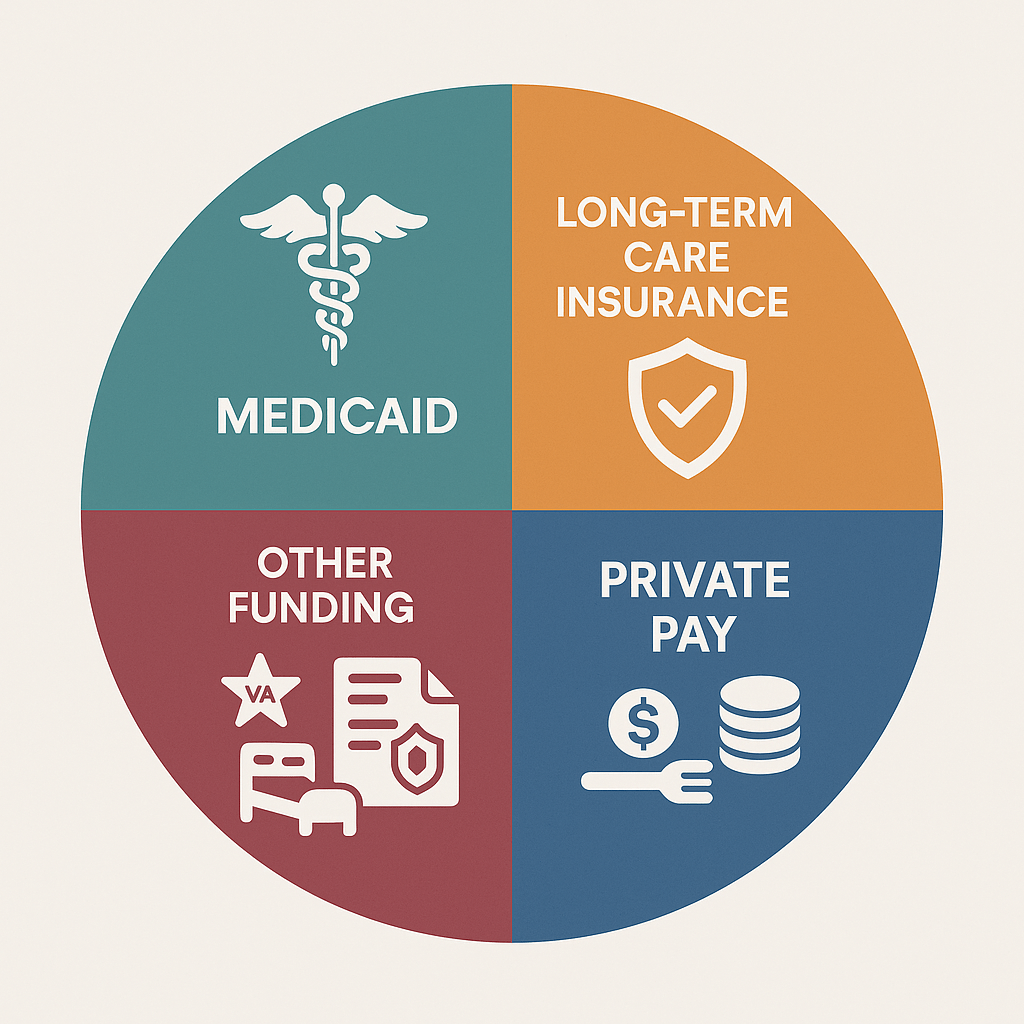
Medicaid is the single largest payer of long-term nursing home care in the U.S. But unlike Medicare, it’s a program for people with low income and very limited assets.
In 2025, a single person generally cannot have more than $2,000 in countable assets, and monthly income often must be below $2,901 (limits vary by state). Once qualified, almost all of the person’s income goes toward the nursing home, and Medicaid covers the rest.
Important: States enforce a five-year “look-back period” to check for any asset transfers meant to qualify for Medicaid. These rules are strict and vary by state—making professional guidance critical.
Long-Term Care Insurance – Protecting Your Assets
Long-term care insurance is a private policy designed specifically to cover custodial care costs, whether at home or in a facility.
- Pro: A strong policy can protect your family’s life savings.
- Con: Premiums can be high, and you must generally be in good health to qualify.
Like fire insurance, you can’t buy it when the house is already burning—you need to plan years in advance.
Private Pay and Personal Assets
If you don’t qualify for Medicaid and don’t have LTC insurance, you’ll pay out-of-pocket. This often means using:
- Retirement accounts
- Savings
- Pension income
- Investments
- Selling the family home
Without a plan, a lifetime of savings can disappear in just a year or two.
Other Possible Funding Sources
- VA Aid and Attendance benefits for eligible veterans
- Life insurance with long-term care riders that allow you to use part of the death benefit for care
For most families, it comes down to Medicaid, long-term care insurance, or private pay—and knowing which is right for you starts with a clear financial plan.

Your Long-Term Care Planning Action Plan
Knowing the facts about Medicare nursing home coverage is one thing—but what you do with that knowledge is what matters. If you’re here, it’s because you want to protect your family and avoid a financial crisis.
Here’s a four-step action plan you can start today to begin defusing that time bomb.
Step 1 – Have the Long-Term Care Conversation
This is the hardest step, but it’s also the most important. Sit down with your parents and siblings for an open, honest discussion about long-term care needs. Talk about wishes, preferences, and—just as importantly—money.
It’s uncomfortable, but the cost of not having this talk is far greater.
Step 2 – Create a Financial Inventory
You can’t make a plan without knowing your starting point. Gather the details on:
- Monthly income from Social Security, pensions, or other sources
- Savings accounts and investments
- Real estate holdings
A clear financial picture is the foundation for any nursing home cost planning.
Step 3 – Research the Real Costs in Your State
Nursing home costs vary dramatically by location. A private room in Texas may be around $5,500 a month, while in Connecticut, it could be triple that.
Do a quick search for “nursing home cost in [your state]” to get accurate numbers. Seeing the real cost makes the challenge—and the urgency—very real.
Step 4 – Consult an Elder Law Attorney or Financial Planner
Don’t try to navigate this alone. An Elder Law Attorney or certified financial planner who specializes in long-term care planning can create a legal and financial strategy tailored to your family.
They know the Medicaid rules, asset protection laws, and funding strategies that can save you thousands. Think of it not as an expense, but as an investment in your family’s stability and peace of mind.

The Truth About Medicare and Nursing Home Costs
So, will Medicare pay for nursing home care? The hard truth is—almost always—no. Medicare will only cover a short period of skilled, rehabilitative care after a qualifying 3-day hospital stay. Even then, the coverage is limited and comes with significant out-of-pocket costs after day 20.
It is not—and was never designed to be—a solution for long-term custodial care.
Relying on Medicare as your family’s long-term care plan isn’t a plan at all. It’s a direct path to a financial crisis. But you’re here, learning the truth, and that’s the most powerful first step you can take.
Now you have the knowledge to:
- Have those tough but necessary conversations
- Get financially organized
- Create a real plan that protects your family’s future
If you’ve been through this, your story could be the lifeline someone else needs. Please share it in the comments. And if you know someone who might face this challenge soon, share this article with them—it could spare them thousands of dollars and months of stress.
If you’re a woman over 50 like me who wants to see more of the world, travel in style, and feel confident your future is protected — so you can live this chapter boldly with someone on your side — you’re in the right place.
Subscribe to The Journal for honest, easy-to-follow insights on Medicare, travel, and smart planning for your next chapter.
Medicare rules vary by situation—see our full Medicare guide here.
Frequently Asked Questions About Medicare Nursing Home Coverage