
OTC and Grocery Benefits in Medicare Advantage: What They Are—and What They Are Not
If you’ve spent any time online lately, you’ve probably seen posts promising grocery cards, OTC money, or “extra benefits” tied to Medicare. The messages are often confident, upbeat—and incomplete. And when it comes to Medicare decisions, incomplete information is where costly mistakes begin.
OTC and grocery benefits do exist in some Medicare Advantage plans. But they are often misunderstood, frequently overstated, and sometimes used as bait rather than explained as what they truly are: optional, limited supplemental benefits that vary widely by plan, location, and eligibility. They are not part of Original Medicare, they are not guaranteed, and they are never something to assume without verification.
This article is here to slow the conversation down. Not to sell you anything. Not to promise what may not apply to you. But to clearly explain what OTC and grocery benefits are, what they are not, and why clarity matters more than excitement when you’re making decisions that affect your health, finances, and peace of mind.
Because in this chapter of life, confidence doesn’t come from chasing extras—it comes from understanding the ground you’re standing on.

Why This Topic Causes So Much Confusion

OTC cards and grocery benefits didn’t suddenly appear—but the way they’re being talked about certainly has. In recent years, these benefits have become a favorite headline online because they’re easy to simplify, easy to sensationalize, and easy to misunderstand when taken out of context.
Short videos, graphics, and ads tend to reduce complex plan rules into a single promise: extra money for everyday needs. What’s usually left out are the conditions, the limitations, and the reality that these benefits are neither universal nor permanent. When nuance disappears, assumptions rush in—and Medicare is not forgiving of assumptions.
So before going any further, it’s important to be clear about a few things:
- OTC and grocery benefits are not part of Original Medicare.
- They are not guaranteed, even within Medicare Advantage.
- They are not available to everyone, and eligibility is never automatic.
This matters because these benefits are often discussed as though they are a standard feature, when in reality they are optional, plan-specific extras. Understanding that distinction upfront prevents disappointment later—and keeps the focus where it belongs: on informed decision-making rather than optimistic shortcuts
What OTC Benefits Actually Are
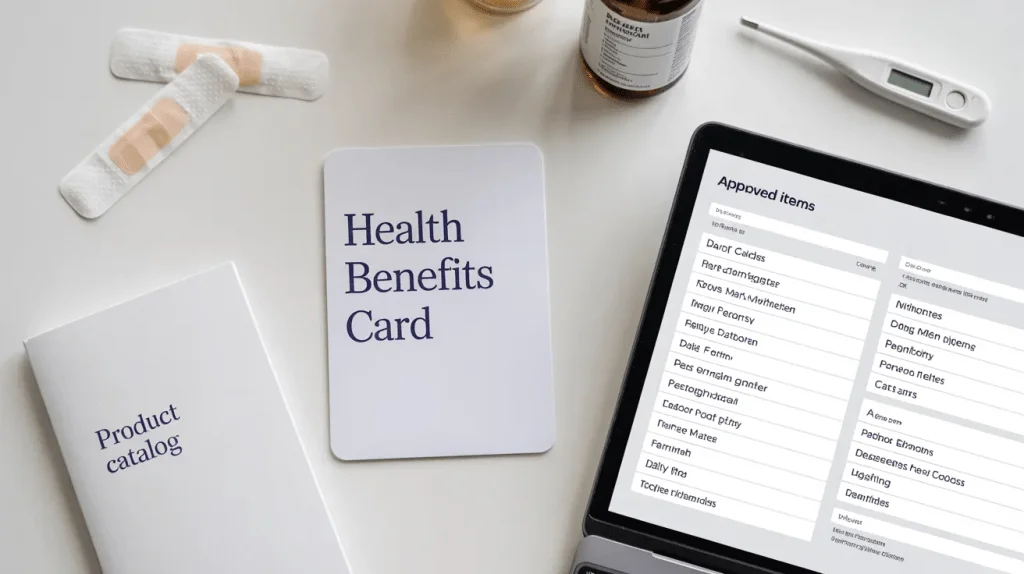
In the context of Medicare Advantage, “OTC” stands for over-the-counter—a category that refers to certain non-prescription items some plans choose to include as part of their optional benefits. These are not medical services, and they are not core Medicare coverage. They are add-ons, created and controlled by individual plans.
When offered, OTC benefits may allow members to obtain select health-related or personal care items. The specific items that qualify are determined by the plan and outlined in its materials. What matters most is not the product itself, but the structure behind it: the benefit exists only if the plan elects to offer it, and only within the limits the plan defines.
OTC benefits are typically delivered in one of several ways. Some plans provide a set allowance for a defined period of time. Others use a prepaid card, a catalog system, or an online portal where approved items can be selected. The method can change from year to year, just as the benefit itself can change—or disappear entirely.
The most important clarification is this: OTC benefits are optional supplemental benefits. They are not part of Original Medicare, they are not standardized across Medicare Advantage plans, and they are never guaranteed. Their availability, structure, and value depend entirely on plan design, location, and plan year.
Understanding OTC benefits as supplemental and conditional—rather than expected or assumed—creates the right foundation for every conversation that follows.
What Grocery or Food Benefits Really Are

This is the point where confusion tends to multiply. Grocery or food-related benefits are often discussed as though they are a standard feature of Medicare Advantage, when in reality they occupy a far narrower lane.
These benefits are not universal. Many Medicare Advantage plans do not offer them at all, and among those that do, the structure and purpose can be very specific. Food-related benefits are typically designed for limited circumstances, not broad use, and they exist only within certain plan frameworks.
Two concepts are often referenced in connection with these benefits, and they are worth understanding at a high level—without overcomplicating the discussion.
One is Special Supplemental Benefits for the Chronically Ill (SSBCI). In plans that choose to offer them, these benefits are intended to support members with particular chronic health conditions, as defined by the plan. Eligibility is not assumed and is not open-ended; it is tied to criteria the plan establishes and applies.
Another is Value-Based Insurance Design (VBID). This is a Medicare initiative that allows participating plans to tailor benefits for specific populations or needs. Participation is optional for plans, and the benefits offered under these arrangements can differ significantly depending on location and plan design.
What matters most is this: grocery and food benefits are targeted, conditional, and highly plan-specific. They are not broadly available, and they are not designed to function as general household assistance. Understanding their limited scope helps separate what is occasionally possible from what is commonly implied.
Who May Be Eligible—and Who Often Is Not

Eligibility for grocery or food-related benefits is not determined by interest, need, or awareness. It is determined by plan rules—and those rules are narrower than many people expect.
Whether a person may be eligible depends first on plan participation. Only certain Medicare Advantage plans choose to offer food-related benefits, and that decision can differ even within the same insurance company. Beyond that, county availability matters. A benefit offered in one location may not exist in another, even within the same state.
Eligibility may also be tied to health criteria defined by the plan. These criteria are not standardized across Medicare, and they are not interpreted broadly. They are written, applied, and enforced by the plan itself.
This is where a common myth needs to be corrected. While some food-related benefits are associated with individuals who receive both Medicare and Medicaid, Medicaid enrollment is not always required. At the same time, not having Medicaid does not mean someone automatically qualifies. Eligibility lives in the space between those two assumptions—and that space is smaller than social media suggests.
It’s also important to understand that meeting criteria does not guarantee ongoing access. Benefits can be limited in duration, adjusted, or removed entirely as plan terms change. And ultimately, plans determine eligibility—not Medicare itself.
Understanding who may qualify is less about searching for loopholes and more about recognizing that these benefits are designed for specific circumstances, not broad distribution. That clarity protects expectations and prevents decisions based on possibilities rather than realities.
What These Benefits Are Not

Clarity matters most where assumptions tend to take hold. OTC and grocery benefits are frequently discussed in ways that suggest permanence, entitlement, or broad availability. None of those impressions are accurate—and allowing them to linger creates risk for beneficiaries and confusion in decision-making.
These benefits are not a right or an entitlement. They exist only if a Medicare Advantage plan chooses to offer them, and only under the terms that plan establishes. They can be modified, restricted, or removed entirely.
They are not guaranteed from year to year. Plan benefits change, sometimes significantly, and what exists today may not exist in the next plan cycle—even for the same individual.
They are not a reason, by themselves, to choose a Medicare plan. Decisions based on supplemental benefits alone often overlook more consequential factors, such as provider access, prescription coverage, and overall cost exposure.
They are not available in every county or in every plan. Geographic differences matter, and assumptions based on what someone else receives—whether online or in another location—rarely translate cleanly.
They are also not the same across insurance companies, even when the benefit category sounds similar. Structure, limits, eligibility, and duration can differ widely.
This is the point where viral graphics and oversimplified posts quietly fall apart. What is presented as common, easy, or exciting is often conditional, narrow, and temporary. Understanding what these benefits are not keeps expectations grounded—and prevents decisions built on impressions rather than facts. directly counter viral graphics and ads—without naming them.
Where Benefits May Be Used

When OTC or food-related benefits are offered, how they can be used matters just as much as whether they exist. One of the most common misunderstandings is the assumption that beneficiaries choose where to shop. In reality, plans determine which retailers are approved.
Approved retailers are selected by the plan and can include a mix of local options, online platforms, or other purchasing channels. That list is not fixed. Retailer participation can change, sometimes within the same plan year, and access in one location does not imply access in another.
In some cases, plans may permit the use of benefits at local stores. In others, access may extend to online retailers or certain marketplaces, which can include platforms such as Amazon. When this is allowed, it reflects a plan’s administrative choice—not a special relationship or guarantee.
It’s important to keep the distinction clear: Amazon is a retailer example, not a benefit source. The benefit originates with the plan, operates under the plan’s rules, and remains subject to the plan’s limitations. Medicare does not endorse, recommend, or partner with retailers, and the presence of a familiar name does not change the nature of the benefit itself.
Understanding where benefits may be used—without assuming consistency or permanence—prevents the final layer of misunderstanding that often surrounds this topic.
Why These Benefits Should Never Drive a Medicare Decision

It’s understandable to notice supplemental benefits first. They’re tangible, familiar, and easy to imagine using. But Medicare decisions don’t reward what’s most visible—they reward what’s most durable.
The core of any Medicare choice should rest on fundamentals: access to providers, prescription coverage that aligns with actual needs, and a clear understanding of potential out-of-pocket exposure. These are the elements that shape care over time, not just in moments of convenience.
OTC and grocery benefits sit outside that foundation. They are extras, designed to complement a plan—not define it. When they are treated as the deciding factor, the result is often frustration later, when the benefit changes, expires, or fails to offset more consequential limitations elsewhere.
Choosing a plan for groceries alone may feel practical in the moment, but it frequently leads to regret when the larger picture comes into view. Stability, access, and predictability matter more than any single add-on.
Keeping the focus on essentials isn’t cautious—it’s wise. And it’s the approach most likely to support both health and peace of mind over time.MS marketing guidance and avoids inducement issues.
How to Verify Information the Right Way

When it comes to Medicare, confidence comes from verification—not repetition. The most reliable way to understand what applies to you is to go back to original sources and written materials, rather than relying on summaries or interpretations shared online.
Official plan documents are the starting point. These materials outline benefits, eligibility rules, limitations, and changes in plain terms, and they are the only place where a benefit is fully defined. Reading them may feel less convenient than scrolling, but they provide clarity that short-form content cannot.
It’s also important to use Medicare.gov as a comparison and reference tool. It remains the most consistent public resource for understanding how Medicare Advantage plans differ by location and year. Information found there reflects current plan data rather than generalized claims.
Social media, by contrast, is not a verification source. Posts, videos, and graphics are designed to capture attention, not to explain conditions or exceptions. They can introduce a topic, but they cannot confirm whether a benefit applies to you.
Taking the time to verify information independently isn’t overly cautious—it’s responsible. And in Medicare decisions, responsibility is what protects both your options and your peace of mind.
Final Takeaway: Clarity Over Hype

- OTC and grocery benefits do exist within some Medicare Advantage plans, but they are narrow in scope and carefully defined.
- Availability varies widely by plan design and location, and similarities in name do not signal similarity in access.
- These benefits are subject to change, sometimes from one year to the next, and should never be assumed to continue unchanged.
- Clear understanding will always serve you better than hopeful assumptions—especially when decisions have lasting consequences.
Clarity doesn’t come from chasing what sounds appealing. It comes from understanding how Medicare actually works—and choosing from that place of calm, informed awareness.
Frequently Asked Questions
Are grocery cards or food allowances “real,” or are they a scam?
They can be real as plan-specific supplemental benefits, but they’re not available in every Medicare Advantage plan and are often limited to certain eligibility categories (for example, some SSBCI-related benefits). If someone claims everyone on Medicare automatically gets a grocery card, that’s not accurate. Verify using plan documents and Medicare.gov.
Does Original Medicare (Parts A & B) include OTC or grocery benefits?
In general, Original Medicare doesn’t include OTC allowance cards or grocery allowances as standard benefits. Some extra benefits may be available through Medicare Advantage (Part C) plans instead.
Do all Medicare Advantage plans include an OTC benefit?
No. Many do, but it’s not universal and details vary by plan, county, and year. Always confirm in the plan’s written materials (Summary of Benefits/Evidence of Coverage).
What can I buy with an OTC benefit card?
It depends on the plan’s approved item list. Common categories can include items like first aid supplies, oral care, certain wellness items, and other OTC products—but the exact list and rules vary. Check your plan’s catalog/portal for what’s eligible.
Can I buy anything I want at the store with an OTC card?
Usually no. OTC benefits typically work like a restricted allowance: only certain products are eligible, and purchases outside the approved categories won’t be covered.
Do OTC benefits roll over if I don’t use them?
Often, they don’t roll over, but rules vary by plan (monthly vs quarterly allowances and expiration rules differ). The only reliable answer is your plan’s written benefit rules.
Who qualifies for grocery or “healthy food” benefits?
If a grocery/food benefit is offered, it’s often targeted and conditional (for example, under SSBCI rules or certain Special Needs Plan arrangements). Eligibility isn’t automatic; plans apply their criteria.
Is a grocery card the same thing as SSBCI?
Not always, but many “healthy food” or grocery-type benefits are discussed in the context of SSBCI. SSBCI benefits must meet CMS requirements, and plans determine eligibility based on the statutory definition and plan rules.
Can I use my OTC or grocery benefit online, including Amazon?
Sometimes—but only if your plan’s benefit program supports that retailer and your specific card/network is accepted. Amazon has an OTC Benefits program that accepts certain OTC benefit cards (for example, OTC Network) for eligible items, but acceptance is not universal across all plans/cards. Always confirm your plan’s approved retailer list.
If my friend in another county gets a grocery benefit, will I get it too?
Not necessarily. Benefits vary by location, plan design, and eligibility rules. What someone else receives—especially in another county or state—doesn’t automatically apply to you. Medicare.gov helps you compare what’s available where you live.
Can these benefits change from year to year?
Yes. Medicare Advantage plans can change benefit designs from one plan year to the next. That’s why it’s important not to treat OTC/food benefits as permanent.
What’s the best way to confirm whether a benefit applies to me?
Use a two-step verification approach:
- Medicare.gov to compare plan options available in your county and year.
- The plan’s official written materials (Summary of Benefits/Evidence of Coverage) to confirm eligibility criteria, approved items, retailers, and time limits.
A Separate Consideration
Some readers prefer to plan independently for everyday health, comfort, or travel needs—rather than relying on optional or changing plan benefits. That approach can offer consistency and personal control, especially when routines or travel are involved.
Outside of Medicare planning, I maintain a separate resource page where I share general product categories I personally review through Amazon. These items are selected for everyday use and travel in this chapter of life—not as substitutes for Medicare benefits, and not connected to any health insurance coverage.
This resource is entirely optional, independent of Medicare, and provided for those who prefer to plan on their own terms.
Start here for enrollment rules, IRMAA, Part D changes, and Medicare travel coverage.
In Closing
Start here if you’re retired or standing at the edge of retirement and want fewer surprises.
I offer education-first guidance—no hype, no sales fog—on:
Medicare planning and smart decision-making
Because confusion is expensive, and guessing is not a strategy.
Travel insight for this chapter of life
Not fantasy itineraries—real-world considerations that respect your time, body, and budget.
International Notary Concierge support
For documents that cross borders and need to be done correctly, the first time.
If you want calm, practical guidance delivered with precision,
subscribe to The Journal for planning clarity and updates:
Prefer to learn by watching?
Educational videos are on YouTube
Here’s the truth, and I won’t dress it up:
My role is to provide clear, unbiased education and trusted administrative support.
What you do with that information is—and will always be—your decision.