Can You Keep Medicare and SSI If You Retire Abroad? (Here’s the Truth)
Thinking about retiring abroad? Whether you’re dreaming of a quiet village in Portugal, a sunny beach in Mexico, or a vibrant life in Southeast Asia, there’s a lot to love about life overseas. But before you go, it’s essential to understand how Medicare and SSI abroad could impact your financial security and healthcare access.
You’ve researched the cost of living, started learning the language, and maybe even scoped out your future home. But here’s the part many future expats overlook:
What happens to your Medicare, Social Security, or SSI benefits when you move abroad?
The truth is—not all U.S. government benefits travel with you. In fact, a single mistake could lead to lost income, canceled health coverage, or permanent Medicare penalties.
That’s why it’s so important to understand the difference between:
- Social Security retirement abroad
- SSI eligibility outside the U.S.
- Medicare coverage limitations overseas
Each program has its own rules, restrictions, and consequences—and this guide breaks them down in plain English.
In this guide:
Understanding Medicare and SSI Abroad: What You Need to Know
If you’re planning to retire overseas, here’s the good news: Social Security retirement and disability benefits are usually portable—but only if you meet the right conditions.
For most U.S. citizens, you can continue receiving your Social Security retirement or SSDI payments while living in another country. The Social Security Administration (SSA) already sends payments to over half a million beneficiaries outside the U.S. each year. Whether you retire in Portugal, Mexico, Costa Rica, or Japan, your monthly benefits can typically follow you.
The easiest option is to set up international direct deposit, which works in many countries. If that’s not available, you can still have your payments deposited into a U.S. bank account and manage them online.

But There Are 3 Critical Rules to Know:
1. Country Restrictions Exist
The U.S. Treasury will not send Social Security payments to certain countries—including Cuba, North Korea, and a few others in Central Asia like Uzbekistan. If you move to one of these places, your benefits are withheld but not lost—you’ll need to relocate to an eligible country to access them. Always use the Payments Abroad Screening Tool before moving.
2. Non-Citizens Have Stricter Rules
If you’re not a U.S. citizen, your benefits may stop after 6 months abroad—unless you qualify under a totalization agreement (for example, with countries like Canada, Germany, or South Korea). These agreements coordinate benefit eligibility for people who have worked in both countries.
3. You Must Stay in Touch with the SSA
Even while living overseas, you’re required to verify eligibility. The SSA sends out a proof-of-life questionnaire every 1–2 years. Failing to return it can result in suspended benefits. That’s why keeping your mailing address updated is essential.
Bottom Line: Social Security Is Portable—With Planning
- If you’re a U.S. citizen retiring abroad, you can receive Social Security overseas, but it’s not automatic.
- Use the Payments Abroad Tool
- Stay compliant with SSA communications
- Know the rules for your specific destination
SSI Eligibility Outside the U.S.: What You Need to Know
If you’re planning to move abroad and currently receive Supplemental Security Income (SSI), this is where things get difficult. Unlike Social Security retirement, SSI benefits do not follow you overseas.
Let’s be clear:
If you leave the United States for more than 30 consecutive days, your SSI payments will stop.
This is one of the most critical—and misunderstood—rules for future U.S. expats.

Why Is SSI So Strict?
It comes down to what SSI is.
Unlike Social Security, which you earn by working and paying into the system, SSI is a needs-based program funded by general tax revenue. It’s designed to provide a basic income for elderly, blind, or disabled individuals with limited resources—but only those living in the United States.
For SSI purposes, “United States” means:
- The 50 states
- Washington, D.C.
- The Northern Mariana Islands
Living in Puerto Rico, Guam, or the U.S. Virgin Islands counts as being “outside the U.S.” and makes you ineligible for SSI.
Reinstating SSI After Moving Abroad Isn’t Simple
If your SSI stops because you left the U.S.:
- You must return and live in the U.S. for 30 straight days
- Only then can you re-apply for benefits
- There is no “pause and resume” option—you’ll need to go through the eligibility process all over again
Are There Exceptions?
Yes—but they’re extremely rare:
- Children of military personnel stationed overseas
- Certain students temporarily studying abroad
For most adults receiving SSI, these exceptions won’t apply.
Bottom Line: SSI and Overseas Retirement Don’t Mix
If your retirement or relocation plan depends on SSI income, moving abroad simply isn’t realistic. The program is meant for low-income U.S. residents and doesn’t support international living—even in U.S. territories.
Comparison Chart: What Happens to Medicare, SSI & Social Security If You Move Abroad
| Benefit Type | Can You Keep It Abroad? | Key Rules | Risks to Watch For |
|---|---|---|---|
| Social Security (Retirement & SSDI) | ✅ Yes, in most countries | U.S. citizens can receive payments overseas. Some countries restricted (Cuba, North Korea, etc.) | Keep SSA updated. Use Payments Abroad Tool. |
| SSI (Supplemental Security Income) | ❌ No — stops after 30 days abroad | Needs-based program. Only available in the 50 states, D.C., and Northern Mariana Islands | Payments end even in U.S. territories like Puerto Rico. |
| Medicare (Parts A & B) | ❌ No — doesn’t cover care abroad | U.S.-only coverage. Some rare exceptions on cruise ships or near borders | You’ll need separate expat health insurance. |
| Medicare Part B (doctor coverage) | ⚠️ Optional — must decide before moving | Can keep it and pay monthly, or drop it to save. Dropping = lifetime penalty if you return. | Huge re-enrollment penalties and gaps if you return to the U.S. |
Medicare Abroad Coverage: What Expats Need to Know
Now let’s talk about the most misunderstood part of retiring abroad: Medicare.
This is where many people get caught off guard—and it can cost you thousands.
Does Medicare Work Outside the U.S.?
In almost all cases, no.
Medicare does not cover healthcare services you receive while living abroad.
If you break a leg in Italy or need a check-up in Thailand, Medicare won’t pay a dime. It’s a U.S.-only program that doesn’t travel with you—and those few exceptions are too rare to rely on.
Rare exceptions include:
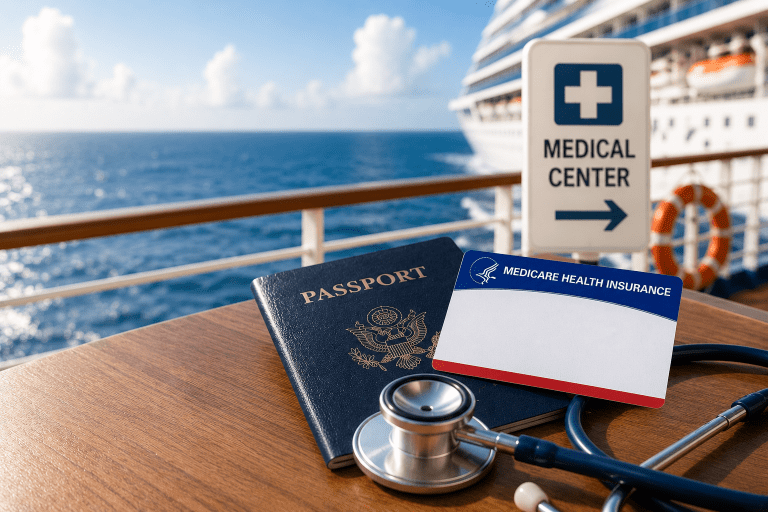
- Medical emergencies on a cruise ship within six hours of a U.S. port
- If a foreign hospital is closer than a U.S. one and you live near the border
But if you’re retiring full-time in another country, these don’t apply.
You must assume your Medicare won’t work abroad.
What Should You Do for Healthcare Abroad?
You’ll need a different health insurance plan, such as:
- Coverage through your new country’s national healthcare system (if you qualify)
- A private international health insurance plan tailored to expats
Start researching before you leave the U.S.—especially if you have pre-existing conditions.

What About Medicare Part B While Living Overseas?
This is the big dilemma. Medicare Part B covers outpatient services like doctor visits—but you can’t use it abroad.
So… do you drop it? Or keep paying?
You have two options:
Option 1: Drop Medicare Part B
You save money on monthly premiums.
But here’s the catch:
If you ever move back to the U.S., you’ll face a lifetime late enrollment penalty.
For every 12-month period you didn’t have Part B, your premium goes up 10% permanently.
If you drop it for 10 years? Your cost could double—for life.
Plus, you’ll have to wait for a special enrollment period, which could mean a dangerous coverage gap during your return.
Option 2: Keep Paying for Part B (Even If You’re Not Using It)
It feels like a waste—paying for something you can’t use.
But many seasoned expats treat it as insurance against future penalties.
Keeping Part B means:
- No re-enrollment hassle
- No permanent penalties
- Immediate coverage if you move back unexpectedly
Bottom Line: Medicare Abroad Isn’t Simple—But You Can Plan Smart
If you’re 100% sure you’ll never return to the U.S., dropping Part B might make financial sense.
But life changes—health issues, family emergencies, or just a change of heart might bring you back.
Many experts advise: Keep Part B if you can afford it. It’s the safety net you hope you’ll never need.

Actionable Steps: How to Protect Your U.S. Benefits Before Moving Abroad
Ready to take the leap and live overseas? Here’s how to make sure you don’t lose your hard-earned U.S. benefits—Medicare, Social Security, and SSI—in the process.
1. Use the SSA’s Payments Abroad Screening Tool
Before you even book your flight, visit the Social Security Administration’s official tool to check if you can receive benefits in your target country.
This tool tells you exactly what you qualify for based on your citizenship, benefit type, and destination.
2. Contact the SSA’s International Office for Special Situations
If your situation is complex—dual citizenship, non-U.S. spouse, or foreign work history—reach out to the Office of Earnings and International Operations (OEIO).
They specialize in handling Social Security for U.S. citizens living abroad.
3. Research International Health Insurance Plans
Since Medicare doesn’t work abroad, you’ll need to purchase separate health insurance.
Start early:
- Compare private expat insurance plans
- Check what’s covered
- Look for policies that cover pre-existing conditions
- Review the claims process and hospital access
4. Make a Decision About Medicare Part B
Should you drop it or keep paying for coverage you can’t use?
- Dropping saves money now, but comes with lifetime penalties and enrollment delays later
- Keeping it protects you financially if you return unexpectedly
Talk with family and weigh your risk tolerance
Final Thoughts: Your Dream Retirement Needs a Smart Strategy
Living abroad can be life-changing—but only if you plan wisely.
To recap:
| Program | What You Need to Know |
|---|---|
| Social Security | U.S. citizens can usually receive benefits abroad. Check your destination. |
| SSI | Payments stop after 30 days overseas. This benefit is not portable. |
| Medicare | Does not cover care outside the U.S. Plan for private insurance + decide on Part B. |
The Key: Be Proactive
Don’t assume your benefits will follow you.
- Use official government tools
- Confirm your destination’s eligibility
- Build a health insurance plan that fits your lifestyle
- Make your Medicare Part B decision before you move
With the right steps, your overseas retirement can be both adventurous and secure.
Plan Your Dream Life Abroad Without Risking Your Benefits
Retiring abroad opens the door to a new adventure—but only if you understand how your U.S. benefits work overseas.
Let’s recap the essentials:
- Social Security is usually portable—but only in eligible countries, and you must stay in contact with the SSA.
- SSI stops after 30 days outside the U.S.—even in places like Puerto Rico or Guam.
- Medicare doesn’t cover care abroad—and dropping Part B could cost you big if you ever return.
Don’t let paperwork—or penalties—derail your plans.
Be proactive. Ask the right questions. Build a safety net before you board the plane.
Download the Checklist Before You Go
Before you take off, make sure you’ve checked every box.
Grab your free “Retiring Abroad Pre-Departure Checklist” to protect your:
- Medicare decisions
- Social Security payments
- SSI eligibility
- Health insurance plan abroad
- Re-entry strategy if you ever return to the U.S.
Click here to download your checklist now and plan your move with confidence.
Your dream life abroad shouldn’t come with financial surprises.
This one checklist could save you years of stress and thousands in penalties.
FAQ: Medicare, Social Security, and SSI When Living Abroad
Thinking about retiring or living abroad? Before you pack your bags, make sure your Medicare, Social Security, and SSI benefits can travel with you. Below are clear, concise answers to the most common questions U.S. citizens have about keeping their benefits overseas—so you can plan confidently and avoid costly mistakes.