Medicare Part D • Prescription Drug Coverage
How to Choose a Medicare Part D Plan Without Getting Burned
The Medicare Part D plan with the lowest monthly premium may actually cost you more. The number that looks like a bargain is only one piece of the puzzle.
Debbie thought she had found a bargain:
She chose the Medicare prescription drug plan with the tiny premium and congratulated herself for being such a smart shopper.
Then January arrived. At the pharmacy counter, the pharmacist looked at the computer and said:
Debbie blinked. “For one prescription?”
That $5 plan suddenly did not feel like much of a bargain.
Debbie is a fictional example, but the mistake she made is very real.
When people ask me which Medicare Part D plan is best, my honest answer is: there is no single best plan for everyone.
The plan your spouse loves—or the one your neighbor swears by—could be completely wrong for you. The right fit depends on your exact prescriptions, dosages, pharmacy, coverage rules, and expected costs.
Quick answer: To choose a Medicare Part D plan, enter every prescription accurately, confirm that each drug is on the plan’s formulary, compare preferred pharmacies, check coverage restrictions, and compare estimated monthly and yearly costs. Do not choose by premium alone.
Looking ahead to 2027? CMS has released the new national base beneficiary premium, but it is not the amount everyone will pay. Here’s what the $41.33 Medicare Part D figure actually means .
Build an exact medication list
Before comparing plans, gather every prescription you take. Prescription bottles are helpful here because “my little white blood pressure pill” will not get you very far in a plan search.
Write down:
- The exact medication name
- The dosage or strength
- The quantity you receive
- How often you refill it
- Whether you take the brand-name or generic version
A small error can create a very different cost estimate. Debbie entered the correct drug but selected the wrong dosage. That one detail changed the numbers she saw.
Do not leave off an inexpensive medication because you pay only a few dollars for it today. Formularies, tiers, and pharmacy pricing can change from one plan or year to another. Your comparison is only as accurate as the medication list you enter.
Check the Medicare Part D formulary and drug restrictions
Every Medicare Part D plan has a formulary—its list of covered drugs. But finding your prescription on that list is not the finish line.
Check the medication’s tier and see whether there are any extra hoops, such as:
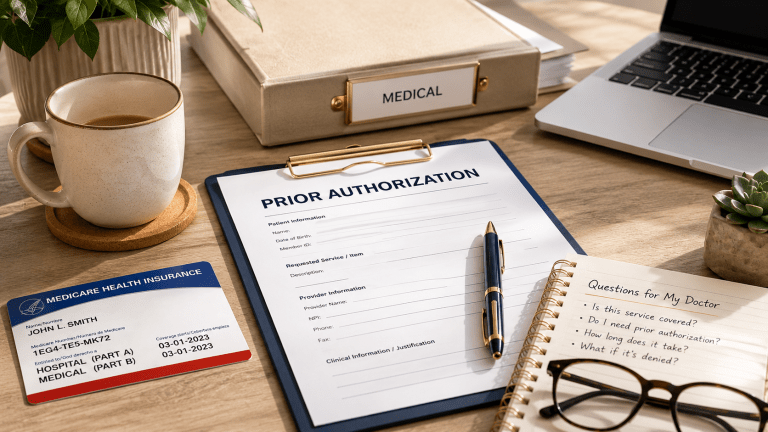
- Prior authorization: The plan may need information from your prescriber before it will cover the drug.
- Step therapy: You may be required to try another covered medication first.
- Quantity limits: The plan may limit how much it covers at one time.
A prescription can technically be covered while still having conditions attached. You want to know about those conditions before you are standing at the pharmacy counter.
Compare the pharmacies you would actually use
Your pharmacy can affect what you pay for the same prescription under the same plan.
A plan may treat one location as a preferred in-network pharmacy and another as a standard in-network pharmacy. Preferred pharmacies may offer lower copays or coinsurance because of their agreement with the plan.
That was Debbie’s second surprise. Her neighborhood pharmacy was convenient and familiar, but it was not preferred under the plan she selected. The same medication cost less at another in-network pharmacy nearby.
Compare the actual cost at:
- Your current pharmacy
- One or two preferred pharmacies nearby
- The plan’s mail-order option, if you are comfortable using it
Do not assume mail order is automatically cheaper. Sometimes it is. Sometimes it is not. Check the numbers.
Convenience has value, too. Saving $4 may not be worth driving 30 minutes across town every month. You are not simply looking for the lowest price; you are looking for an option that works for your medications, your budget, and your life.
Look at estimated yearly costs—not only the premium
This is the number many people miss. When you use Medicare’s Plan Compare tool, enter your medications and pharmacies so you can review personalized estimates for the plans available in your area.
Your estimated yearly drug and premium costs may reflect:
A plan with a higher premium may cost less overall if it covers your prescriptions more favorably. Debbie had dismissed one option because its premium was higher. When she compared the estimated yearly totals, that plan could have saved her hundreds.
The cheapest-looking plan was not the least expensive plan.
Remember that estimates are not guarantees. Drug prices, prescriptions, and your use of coverage can change. Still, a personalized estimate is far more useful than comparing premiums in isolation.
Notice when you may have to pay more
Two plans can have similar estimated yearly totals but very different monthly costs. One may require you to meet a drug deductible early in the year. Another may offer more predictable copays for certain tiers.
So do not ask only, “What might this cost for the year?” Also ask, “What might I pay in January and February?”
2026 Part D numbers to know
In 2026, no Medicare drug plan can have a deductible higher than $615, although some plans have a lower deductible or no deductible. The annual out-of-pocket limit for covered Part D drugs is $2,100.
Premiums, non-covered drugs, and purchases made outside your plan generally do not count toward that $2,100 limit.
If high prescription costs arrive early in the year, the Medicare Prescription Payment Plan may let you spread eligible out-of-pocket Part D costs across the remaining months of the calendar year.
But let’s make one point crystal clear: it changes when you pay. It does not lower your total drug costs.
Review your Medicare Part D plan every year
Your prescriptions can change. Your pharmacy’s network status can change. And your plan may change its premium, formulary, tiers, deductible, or cost-sharing for the following year.
That does not mean you must switch plans every year. It means your current plan should earn its place again before you let it renew automatically.
Review the plan’s Annual Notice of Change, update your medication list, and run a fresh comparison during Medicare Open Enrollment. For most people, Open Enrollment runs from October 15 through December 7, with changes taking effect January 1.
By the following enrollment season, Debbie handled things differently. She gathered her prescription bottles, confirmed every dosage, compared pharmacy prices, reviewed the restrictions, and looked at the yearly estimate.
This time, there was no unpleasant surprise at the counter—just the quiet satisfaction of knowing she had made an informed decision.
So, which Medicare Part D plan is best?
It is not necessarily the plan with the lowest premium, the most familiar company name, or the largest-looking formulary. And it is definitely not automatically the plan your spouse, friend, or neighbor chose.
The best Medicare Part D plan for you is the one that offers the strongest overall fit based on:
- Your exact medications and dosages
- Your preferred pharmacies
- Any coverage restrictions
- Your estimated monthly and yearly costs
- How those costs fit into your household budget
The details are not a nuisance here. The details are the decision.
Medicare Part D questions people are asking
How much does Medicare Part D cost?
There is no single Part D price. Premiums, deductibles, copays, and coinsurance vary by plan, medications, pharmacy, location, and sometimes income. Compare your estimated total costs—not only the monthly premium.
Does every Medicare Part D plan have a deductible?
No. Some plans have no deductible or apply it only to certain drug tiers. In 2026, a Part D deductible cannot exceed $615.
Where can I compare Medicare Part D plans?
Use the official Medicare Plan Compare tool to see plans available in your ZIP code. Enter your current prescriptions, dosages, quantities, and pharmacies for a more useful comparison.
Can a Medicare Part D plan be changed anytime?
Usually, no. Most people make changes during Medicare Open Enrollment from October 15 through December 7. You may have another opportunity if you qualify for a Special Enrollment Period or certain other circumstances.
Is Medicare Part D mandatory?
Part D is optional. However, if you go 63 days or more without Part D or other creditable prescription coverage after you are eligible, you may owe a late enrollment penalty if you enroll later. Do not drop employer, retiree, union, VA, or other drug coverage until you understand whether it is creditable and what else may be affected.
Can I use GoodRx or another discount card with Medicare Part D?
You generally choose either your Part D coverage or a discount-card price for a prescription; the two are not combined. If you buy a drug outside your Part D plan using a discount card, that purchase generally will not count toward your plan deductible or Part D out-of-pocket limit. Compare carefully before choosing the cash or discount price.
Helpful official Medicare resources
Make your plan review easier
My free Medicare Open Enrollment Checklist will help you gather the details you need before comparing your coverage.
Get the Free Medicare ChecklistNo call centers. No 1-800 numbers. Just Robin.
That’s Medicare, minus the headache.

Robin Dall
Florida Medicare Broker & Educator
Robin Dall is a Florida Licensed Life, Health & Annuity Agent and founder of RobinsWisdom. This article was researched, written, and reviewed by Robin and reflects Medicare rules and guidance available at the time of publication.
About Robin Dall →