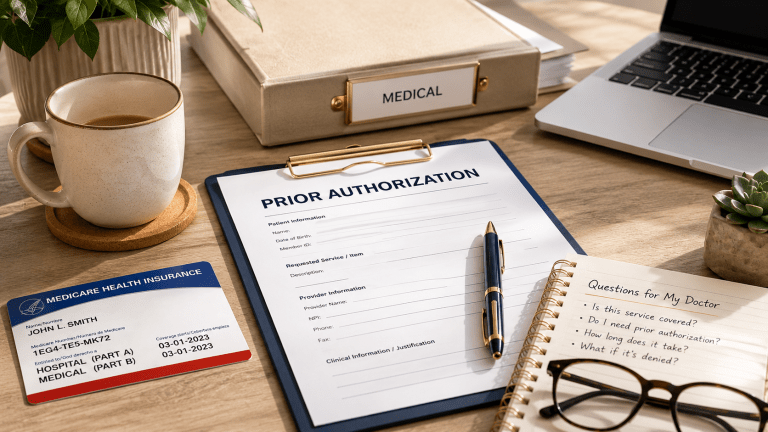
How to Get Medicaid in Florida (If You’re on Medicare)
Most people I talk to think Medicaid is only for people with no income.
Or they assume if they already have Medicare, they don’t qualify.
That’s not always true.
If you’re in Florida and you’re on Medicare, you might qualify for Medicaid — and if you do, it can help pay your Part B premium and lower your out-of-pocket costs.
So let’s answer the real question:
Can you get Medicaid in Florida… and how do you actually apply without getting denied?
What Florida Medicaid actually is (and why it’s confusing)
Florida Medicaid is a government health coverage program for specific groups of low-income individuals and families.
But here’s where most people get tripped up:
- It’s not just based on income.
- And it doesn’t work the same way in every state.
In Florida, eligibility is handled by the Department of Children and Families (DCF), while the actual services are run through the Agency for Health Care Administration (AHCA).
Two different agencies… which is part of why this feels so confusing when you’re trying to figure it out.
And here’s the big one most people don’t know:
Florida did not expand Medicaid under the Affordable Care Act.
That means simply having a low income is not enough to qualify if you’re a working-age adult without a disability or dependent children.
The rules here are stricter — and everything depends on what category you fall into.
Step 1: Do you actually qualify for Medicaid in Florida?
Before you apply, this is the part that matters most.
Because Medicaid in Florida isn’t just based on income —
it’s based on what category you fall into.
And this is where a lot of people get tripped up.
If you’re on Medicare (this is you)
If you’re 65 or older — or you’re on Medicare due to a disability —
you may qualify for Medicaid under a different set of rules than younger adults.
For example:
- If you receive Supplemental Security Income (SSI), you’re typically automatically eligible for Medicaid.
- If you need help with long-term care (like nursing home care or in-home support), there’s a separate program with its own rules.
For long-term care Medicaid in Florida:
- Income is capped at about $2,982 per month
- Assets are typically limited to about $2,000
But here’s something most people don’t know:
If your income is too high, that doesn’t automatically disqualify you.
Florida allows something called a Qualified Income Trust (or Miller Trust), which can help you still qualify legally.
If you’re not in this category
This is where Florida gets strict.
- Adults without disabilities and without dependent children generally do not qualify at all
- Parents with children must have extremely low income — often just a few hundred dollars per month
- Children and pregnant women have different, higher income limits
And this is because Florida did not expand Medicaid —
so eligibility is much more limited than people expect.
What this means for you
Most of the people I talk to fall into one of two groups:
- They assume they don’t qualify… but they actually might
- Or they apply under the wrong category and get denied
That’s why checking this first matters.
Simple next step
Before you go any further, you can run a quick eligibility check through the Florida ACCESS system.
It only takes a few minutes and gives you a starting point.
If you’re still trying to understand how Medicare works before layering Medicaid on top, I have a free video series that breaks it down step-by-step:
Free Medicare Video Series
Step 2: What you need before you apply (this is where most people get stuck)
This is the part that trips people up.
Not because it’s complicated…
but because no one tells you what to expect.
Most Medicaid applications don’t get delayed because someone didn’t qualify.
They get delayed because something was missing.
A document.
A statement.
A small detail that slows everything down.
So before you apply, it helps to have your paperwork ready.
Here’s what you’ll typically need
You don’t need to panic and gather everything perfectly before starting…
But having most of this ready will make the process much smoother:
- Proof of identity and Florida residency — driver’s license, state ID, utility bill, or lease
- Proof of citizenship or legal status — birth certificate, passport, or naturalization papers
- Social Security numbers for anyone applying
- Proof of income — Social Security letter, pension, or pay stubs
- Bank and asset statements — recent balances for accounts and investments
- Other documents depending on your situation — Medicare card, marriage certificate, vehicle info, or medical records
One important detail here:
Always report gross income — that’s before taxes are taken out.
This is a very common mistake.
If you’re applying for long-term care Medicaid
There’s one extra piece people don’t expect.
Florida will review up to 5 years of financial history to look for asset transfers.
That includes things like:
- Giving money to family
- Selling something below market value
- Adding someone’s name to an account or property
If something like that happened, it doesn’t automatically disqualify you —
but it can affect your eligibility timeline.
This is where it can be worth talking to an elder law attorney before making any big financial moves.
Simple tip that makes this easier
Scan or take photos of your documents ahead of time.
That way, when you apply online, you can upload everything quickly instead of scrambling later.
Pro tip: scan everything and save digital copies. It makes uploading to the online application much faster.
If you want a rough idea of where you stand before applying, there are some online tools that can help.
One example is the Florida Medicaid eligibility calculator here:
Florida Medicaid Eligibility Calculator
It can give you a general estimate based on your income and assets.
Just keep in mind — these tools are a starting point.
They don’t account for every situation, especially things like Qualified Income Trusts or more complex financial setups.
Step 3: How to apply for Medicaid in Florida (without getting overwhelmed)
Once you’ve checked your eligibility and gathered your documents, this is the part where you actually apply.
And I’ll be honest — this is where a lot of people start to feel overwhelmed.
But it’s more manageable than it looks once you know what to expect.
The easiest way to apply
The fastest way is online through the Florida ACCESS system.
ACCESS Florida Application Portal
You can:
- Create an account
- Fill out the application at your own pace
- Save your progress if you need to step away
- Upload your documents directly
Most people I talk to prefer this option because you can do it on your own schedule.
Other ways to apply (if online isn’t your thing)
If you’re not comfortable applying online, you do have other options:
- You can apply by phone through the Department of Children and Families
- You can go in person to a local service center
- Or you can print and mail in a paper application
It just tends to take a little longer.
One mistake I see all the time
This one is simple, but it causes a lot of problems.
- Reporting take-home income instead of gross income
Always use the amount before taxes are taken out.
If that number is off, it can delay your application or lead to a denial.
One more thing to know
You don’t need to have every single document perfectly ready before you start.
You can submit the application and then provide anything they request afterward.
But the sooner you respond to those requests, the faster your application moves.
Step 4: What happens after you apply (and what to expect)
Once you submit your application, this is where the waiting starts.
And for a lot of people, this is the most frustrating part—because you’re not always sure what’s happening behind the scenes.
How long it usually takes
Florida has up to:
- 45 days to process a standard application
- Up to 90 days if your application is based on a disability
Sometimes it’s faster. But it’s normal for it to take a few weeks.
Will someone contact you?
In most cases, you won’t need an interview.
But that doesn’t mean you won’t hear from them.
If the Department of Children and Families (DCF) needs anything—like a missing document or clarification—they’ll reach out.
This is important:
If you get a request, respond as quickly as you can.
That’s one of the biggest factors in how fast your application moves.
How to check your status
You don’t have to just wait and wonder.
You can log into your MyACCESS account anytime to:
- Check your application status
- See if documents are requested
- Upload anything that’s missing
What happens if you’re approved
If you’re approved, you’ll receive:
- A welcome packet
- Your Medicaid ID card in the mail
From there, you’ll choose a managed care plan.
If you’re not sure how to pick one, you can speak with a choice counselor or use the state’s plan selection site:
Florida Medicaid Managed Care Plans
If you qualify for both Medicare and Medicaid, there may be additional plan options available to you.
These are called Special Needs Plans, and they’re designed specifically for people who have both types of coverage.
I break that down in simple terms here:
Florida Medicare Special Needs Plans
Real talk (this part matters)
I’ve seen people get approved… and not even realize what they qualified for.
And I’ve seen people miss follow-up requests and end up delayed for weeks.
So don’t just apply and forget about it.
Keep an eye on your account, respond quickly, and stay involved in the process.
Step 5: If you’re denied (don’t panic)
If your application gets denied, take a breath.
A denial is not always final.
In fact, a lot of denials happen for simple reasons:
- A missing document
- A small reporting mistake
- Something that can be fixed quickly
First thing to do
Read your denial notice carefully.
I know—it’s not the most fun thing to go through.
But it will tell you exactly:
- Why you were denied
- What your next step is
- And how to appeal if needed
How long you have to fix it
In most cases, you have about 90 days to file an appeal (called a “fair hearing”).
If you’re already receiving benefits and trying to keep them active during an appeal, the window can be much shorter—sometimes around 10 days.
So timing matters here.
You may not even need a formal appeal
This is something most people don’t realize.
If the denial was due to something simple—like a missing document—the fastest fix is often just getting that information to your caseworker.
You don’t always need to go through the full appeal process.
If you do need to appeal
There are generally two types:
- Eligibility issues (income or assets) → handled through the state
- Service issues (something your plan didn’t cover) → handled through your plan first
You can go through this process yourself, or you can bring in help—whether that’s a family member, someone you trust, or an attorney.
Real talk (this matters)
I’ve seen people get denied… and assume that was the end of it.
And I’ve seen people fix one small issue and get approved shortly after.
So if this happens to you, don’t assume you’re out.
It’s often just part of the process.
A quick note before you go
Florida Medicaid rules are complicated.
And they change more often than people expect.
If you’re dealing with long-term care, this is where things can get especially sensitive—because decisions around income, assets, or even helping family members financially can affect your eligibility.
That’s why, in more complex situations, it can be worth talking to an elder law attorney before making any big financial moves.
And if long-term care is part of what you’re planning for, there’s a bigger decision most people don’t realize they’re making:
Whether to rely on Medicaid… or plan ahead with insurance.
I break that down here:
Medicaid vs Long-Term Care Insurance (Florida)
What most people misunderstand about Medicaid and Medicare
If you’re on Medicare, Medicaid isn’t just a separate program—it can work alongside your coverage and significantly reduce your costs.
But only if it’s set up correctly.
And that’s where most people feel unsure.
What to do next
If you’re trying to figure out:
- whether you might qualify
- how Medicaid fits with your Medicare
- or what your next step should be
That’s a conversation I’m happy to have with you.
No call centers, no 1-800 numbers — just Robin Dall, Medicare educator and commissioned remote online notary, here to make 65 feel a lot less overwhelming.
Or if you’d rather start on your own, the free checklist is a great place to begin.